---
title: 'Dölauer Heide (Stadt Halle)'
url: 'https://www.waldki.metronom-leipzig.com/en/waldwissen/doelauer-heide'
markdown: 'https://www.waldki.metronom-leipzig.com/en/waldwissen/doelauer-heide.md'
lang: en
date: '2026-07-08'
---
# Dölauer Heide (Stadt Halle)
[  ](https://www.waldki.metronom-leipzig.com/en) [  ](https://www.waldki.metronom-leipzig.com/en)- [DE](https://www.waldki.metronom-leipzig.com/waldwissen/doelauer-heide)
- [EN](https://www.waldki.metronom-leipzig.com/en/waldwissen/doelauer-heide)
## Dölauer Heide
## Dölauer Heide - Area 1a
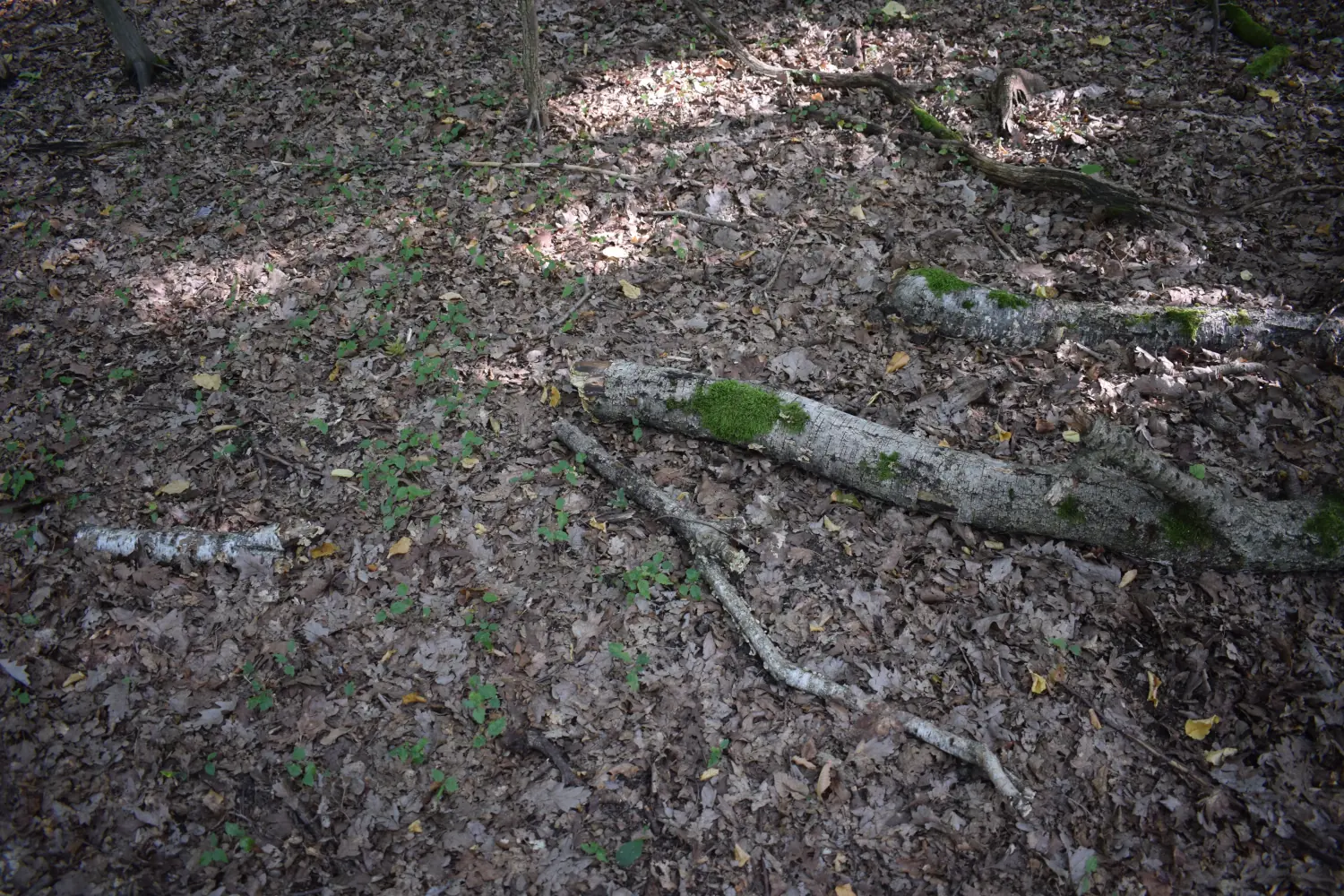 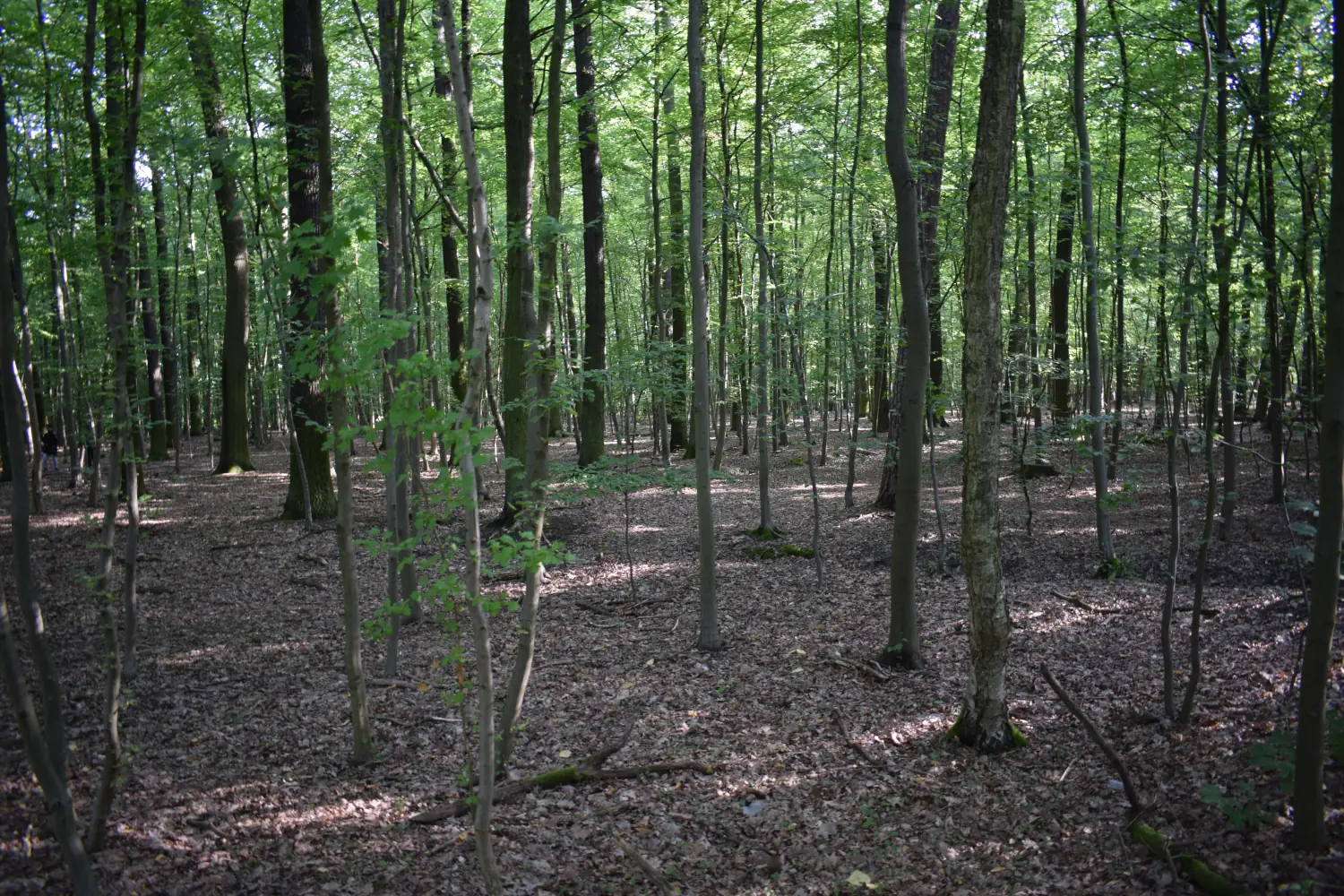 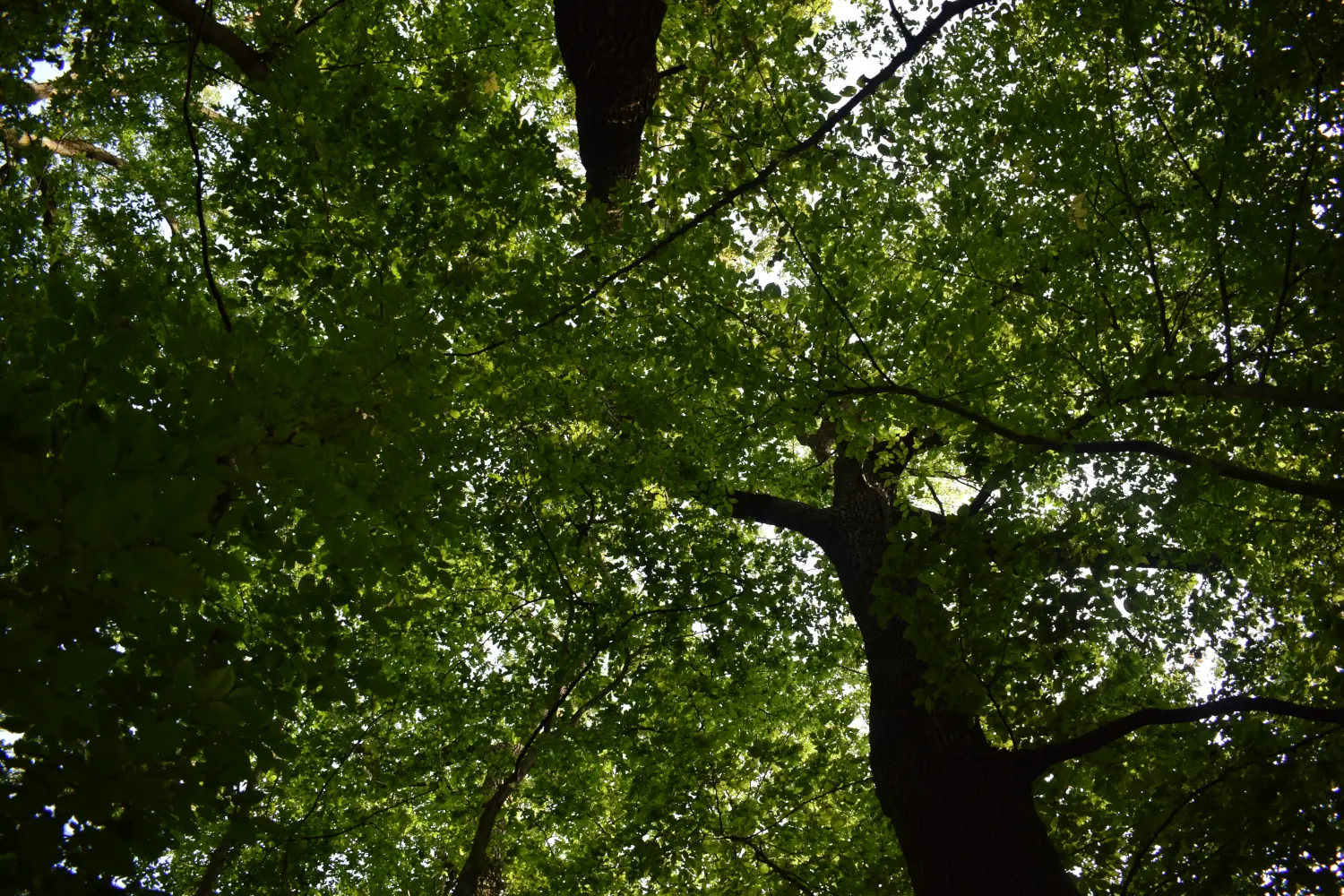
### Key feature: Impairments → Forest monitoring
In this forest section, we identified various "impairments" affecting the stand. Forest monitoring exists also to document the presence and development of such impairments. Monitoring refers to the standardised and continuous scientific collection of data. Forest monitoring is therefore the continuous recording of forest condition. Changes in forest condition can be tracked from the continuity of these recordings. The impacts of events such as bark beetle outbreaks or storm damage, or of specific management measures in the forest (plantings, seeding, tending interventions, natural regeneration development, etc.), can thus be observed, and the necessity of protective measures can be decided. Particularly in the context of climate change and forest conversion, analysing changes in forest condition is important for determining what foresters can do to preserve the forest and make it more resilient through ecologically oriented forest management.
More informationen is provided by [BMLE](https://www.bmel-statistik.de/forst-holz/forstwirtschaft-waldmonitoring) and the [Landeszentrum Wald Sachsen-Anhalt](https://landeszentrumwald.sachsen-anhalt.de/fuer-waldbesitzende/waldbauportal/umweltkontrolle).
### Forest profile

#### Coverage of deadwood
**Large deadwood:** standing 0 %, lying down 0 %
**Medium deadwood:** standing 0 %, lying down 0 %
**Fine deadwood:** 10 %
**Rootstocks:** 4 pcs
*Number of old trees (BHD > 80cm):* 0
*Number of habitat trees:* 0

#### Cover tree layers
**Tree layer 1:** 70 % (Quercus petraea)
**Tree layer 2:** 60 % (Carpinus betulus)
**Tree layer 3:** 10 % (Carpinus betulus, Quercus petraea)
**Herb layer:** 1 %
**Growth classes:** 4

#### Other Information
no impairments found
**Relative crown distance:** closed
**Mean crown defoliation:** 58 %
## Dölauer Heide - Area 2a
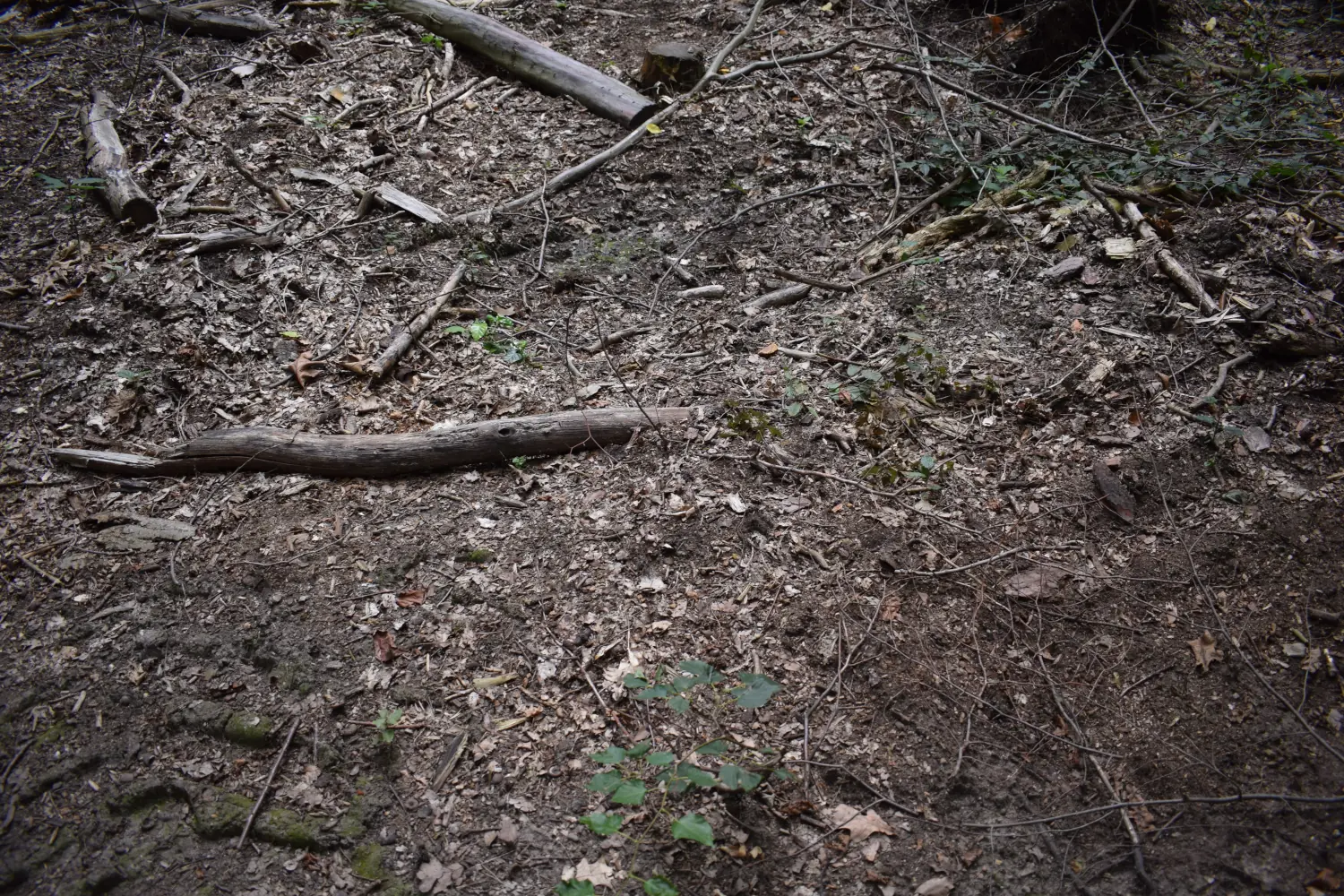  
### Key feature: (Lying) deadwood
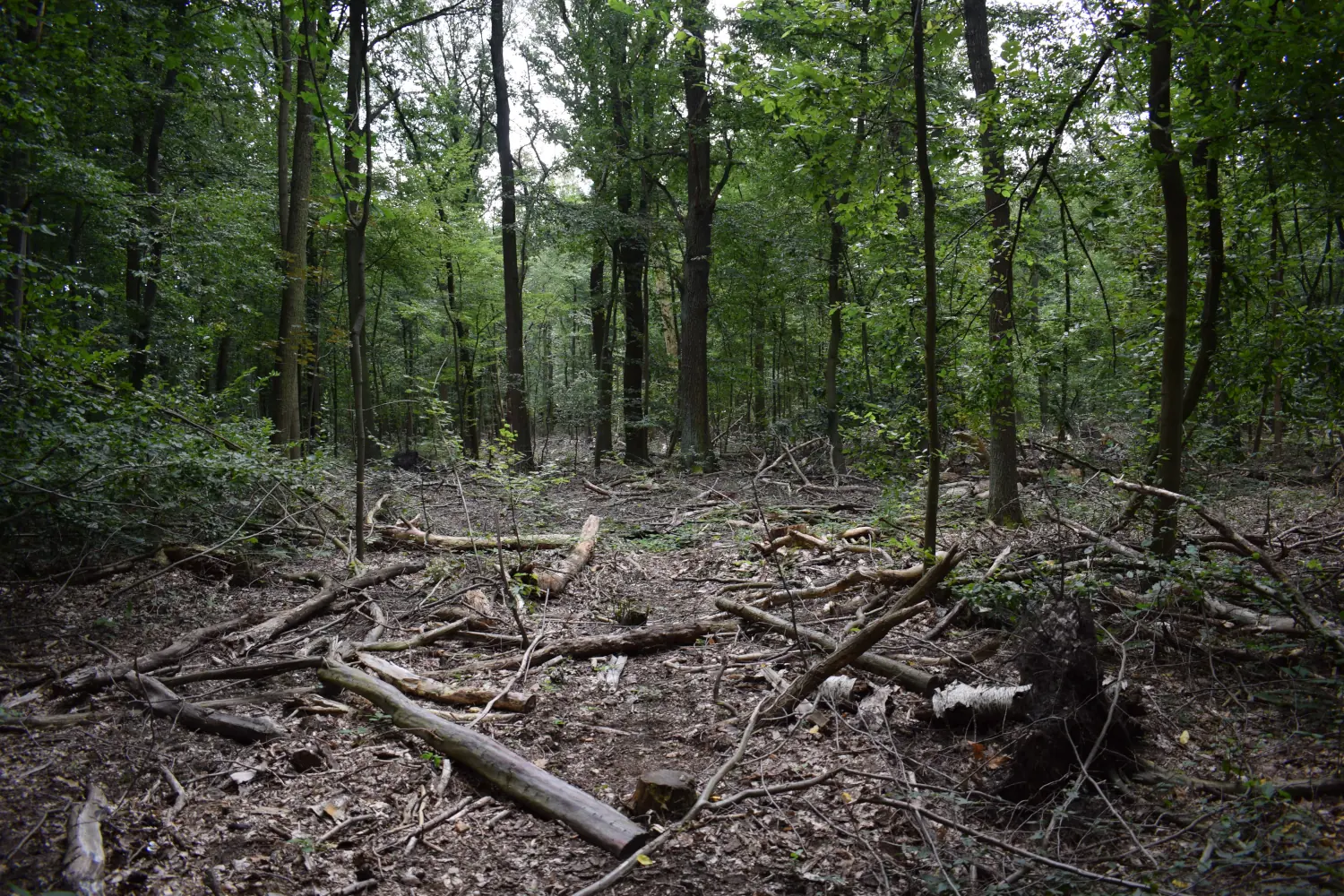
In this forest section, we recorded a considerable amount of fine lying deadwood. Deadwood, in all its forms (fine or large, lying or standing), is a key component of biodiversity and naturalness in forest ecosystems. Approximately one quarter of forest species depend on deadwood for various reasons, particularly many insects and fungi. However, mosses, lichens, and a range of vertebrate species also rely on deadwood habitats.
More info:
### Forest profile

#### Coverage of deadwood
**Large deadwood:** standing 0 %, lying down 0 %
**Medium deadwood:** standing 1 %, lying down 25 %
**Fine deadwood:** 15 %
**Rootstocks:** 14 pcs
*Number of old trees (BHD > 80cm):* 0
*Number of habitat trees:* 0

#### Cover tree layers
**Tree layer 1:** 20 % (Quercus petraea)
**Tree layer 2:** 40 % (Carpinus betulus, Quercus robur, Quercus petraea, Tilia cordata)
**Tree layer 3:** 15 % (Acer pseudoplatanus, Fagus sylvatica, Tilia platyphyllos)
**Herb layer:** 10 % (Rubus)
**Growth classes:** 5

#### Other Information
**Unintended effects of forest operations:** moderate (Logging trail)
**Disturbance indicator species:** low (Rubus)
**Neophytes:** low (Impatiens parviflora, Quercus rubra, Prunus serotina)
**Relative crown distance:** loose to sparse
**Mean crown defoliation:** 39 %
## Dölauer Heide - Area 4a
### Key feature: Rootstocks → Timber harvesting
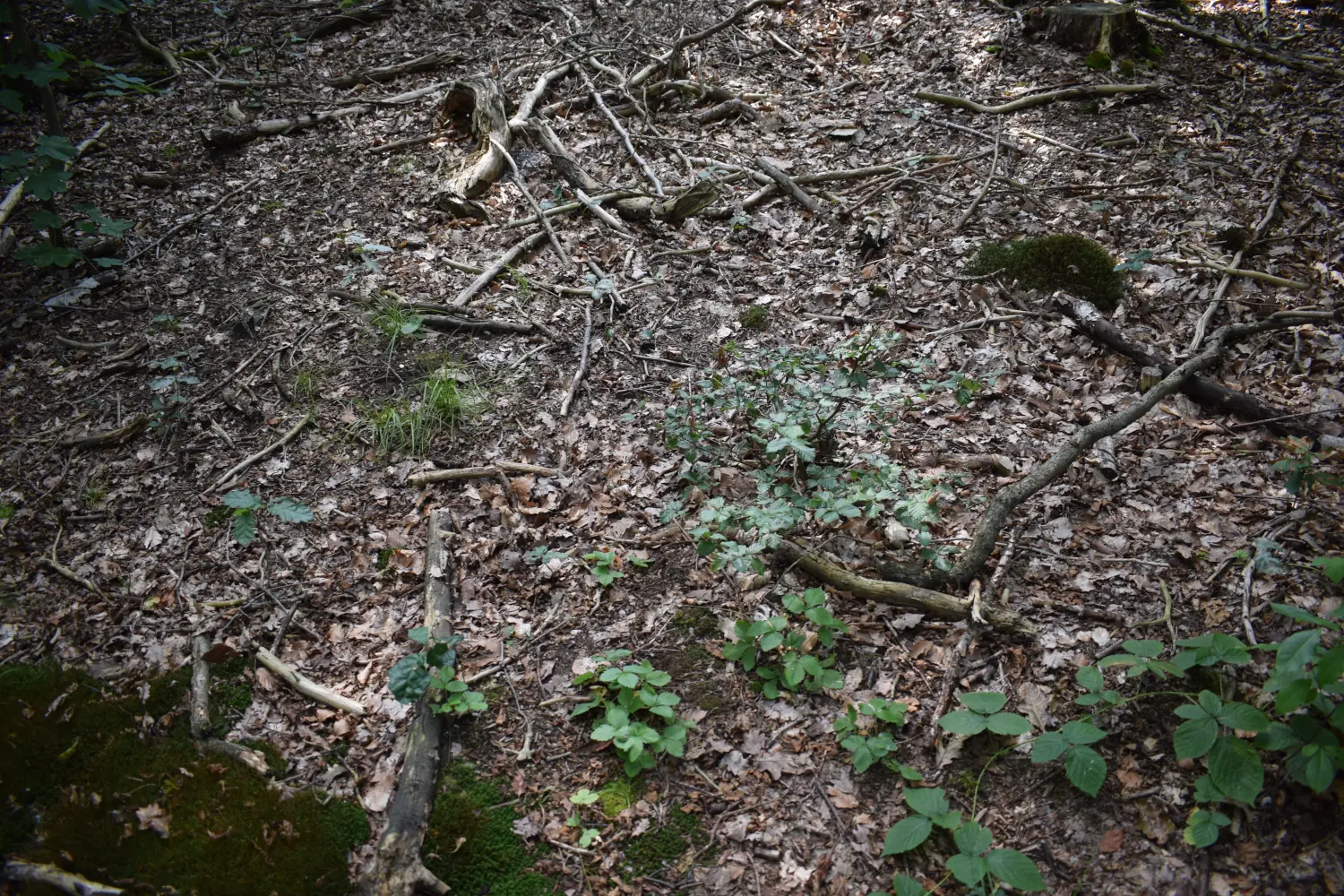
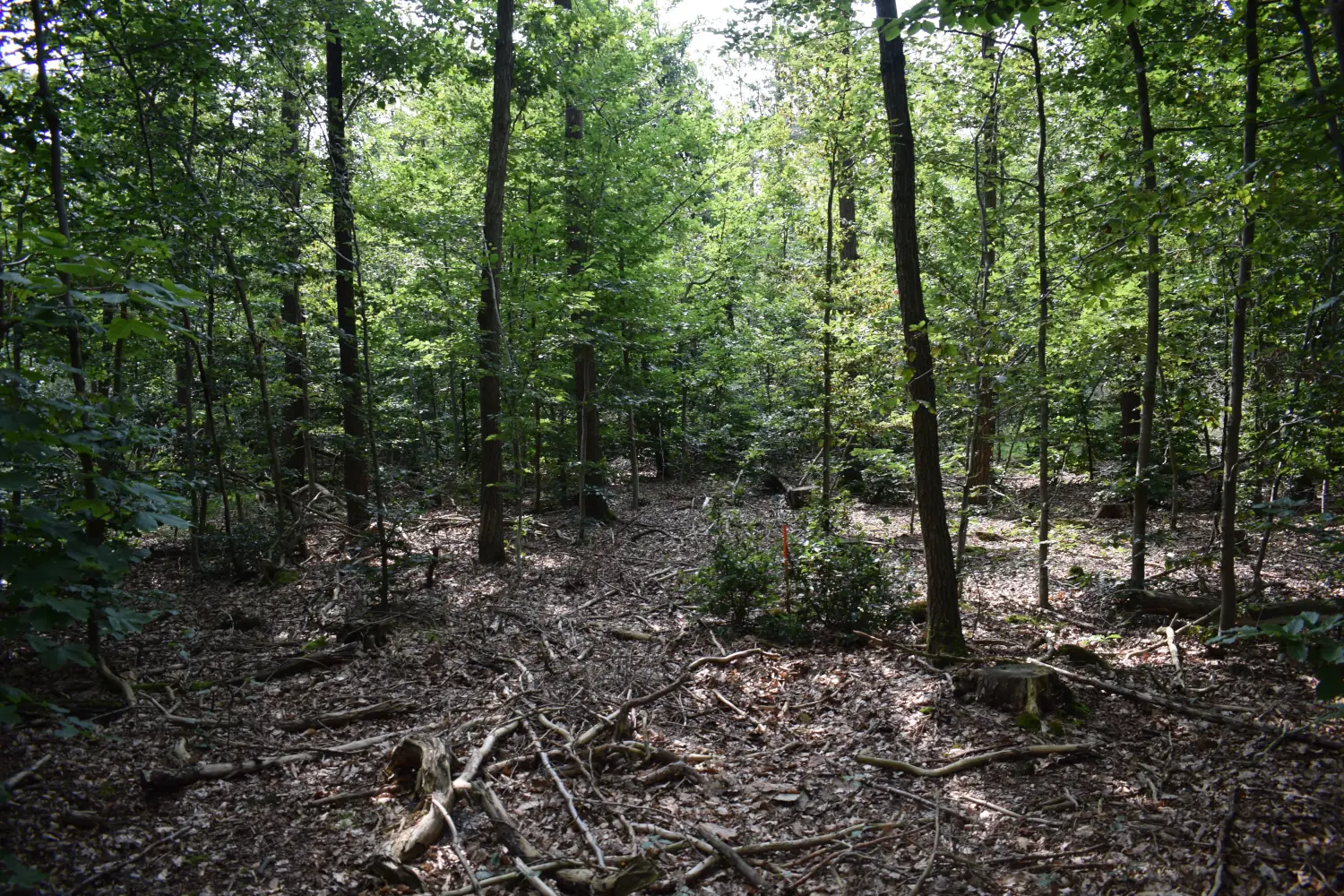
In this forest section, we found a large number of rootstocks. A rootstock (or tree stump) is the remaining part of a tree after felling. Several trees were therefore cut here. But how much timber is actually harvested in Germany each year? Timber volumes are expressed in cubic metres (m³) or solid cubic metres (Festmeter), as the weight of wood depends heavily on the wood/baumarten, moisture content, and other factors. Furthermore, a distinction must be made between total reduction of stock and the utilised portion of this reduction. Between 2012 and 2022, a total reduction of stock of 110.1 million m³ per year (10.2 m³ per hectare per year) was recorded, which is 4% more than in the previous decade.
This is primarily due to the large-scale disturbance events that have occurred since 2018. Only part of this disturbance wood was utilised, as disturbance-damaged wood sometimes remains in the forest for various reasons. Between 2012 and 2022, an average of 72.6 million m³ of roundwood per year was utilised in Germany, which is less than between 2002 and 2012 (75.7 million m³ per year). The total reduction of stock has therefore increased, but utilisation has decreased.
The [summary of the Bundeswaldinventur](https://www.bundeswaldinventur.de/vierte-bundeswaldinventur-2022/zusammenfassung) provides more information.
### Forest profile

#### Coverage of deadwood
**Large deadwood:** standing 0 %, lying down 0 %
**Medium deadwood:** standing 1 %, lying down 5 %
**Fine deadwood:** 20 %
**Rootstocks:** 19 pcs
*Number of old trees (BHD > 80cm):* 0
*Number of habitat trees:* 0

#### Cover tree layers
**Tree layer 1:** 30 % (Quercus petraea)
**Tree layer 2:** 15 % (Fagus sylvatica, Quercus petraea)
**Tree layer 3:** 40 % (Fagus sylvatica)
**Herb layer:** 15 % (Rubus, Poa nemoralis, Deschampsia cespitosa, Carex, Fragaria vesca, Calamagrostis arundinacea)
**Growth classes:** 4

#### Other Information
**Biotic impacts:** low (Wildlife browsing)
**Unintended effects of forest operations:** low (Logging trail)
**Disturbance indicator species:** low (Rubus)
**Neophytes:** low (Mahonia aquifolium, Quercus rubra, Prunus serotina)
**Relative crown distance:** sparse
**Mean crown defoliation:** 80 %
## Dölauer Heide - Area 5a
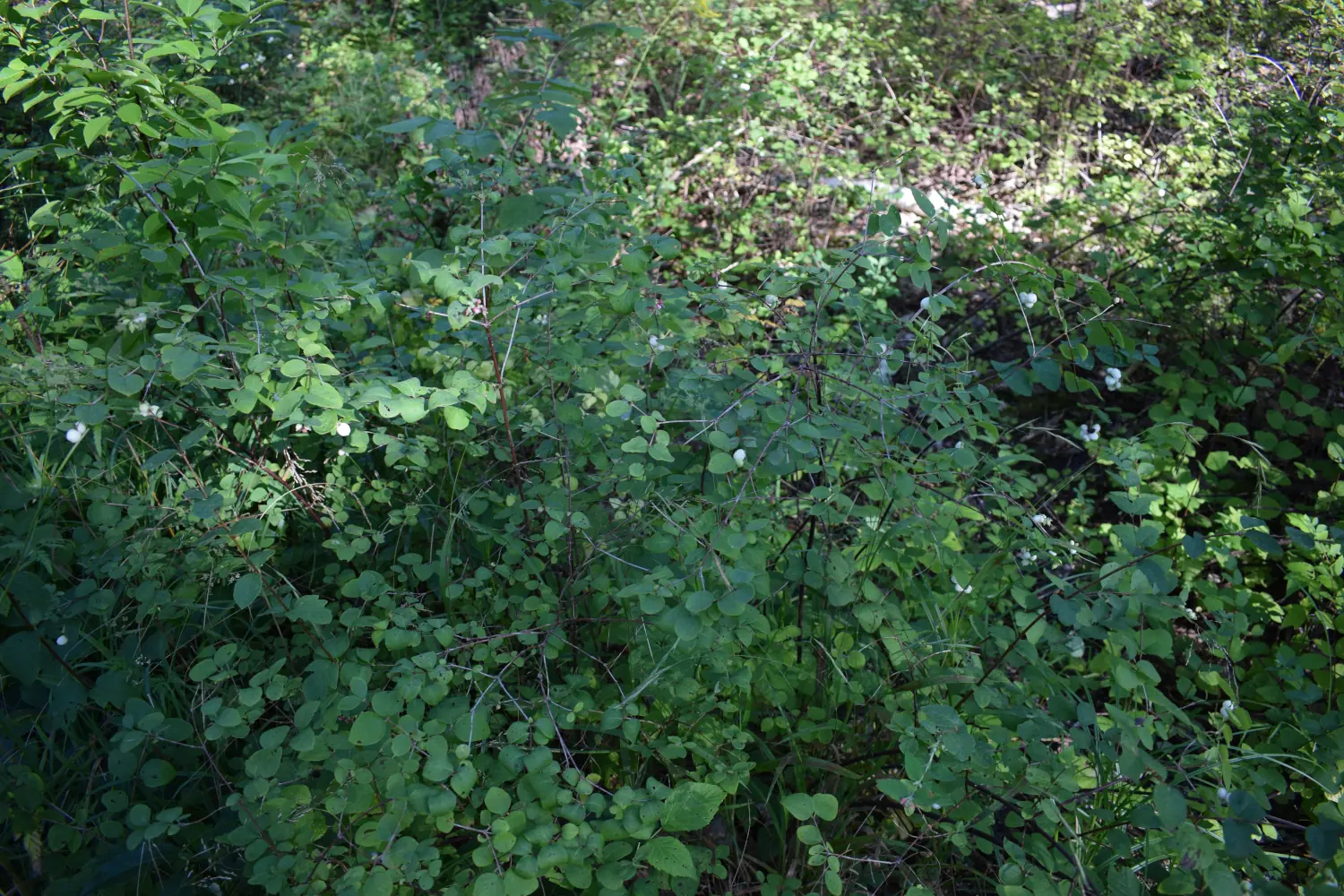  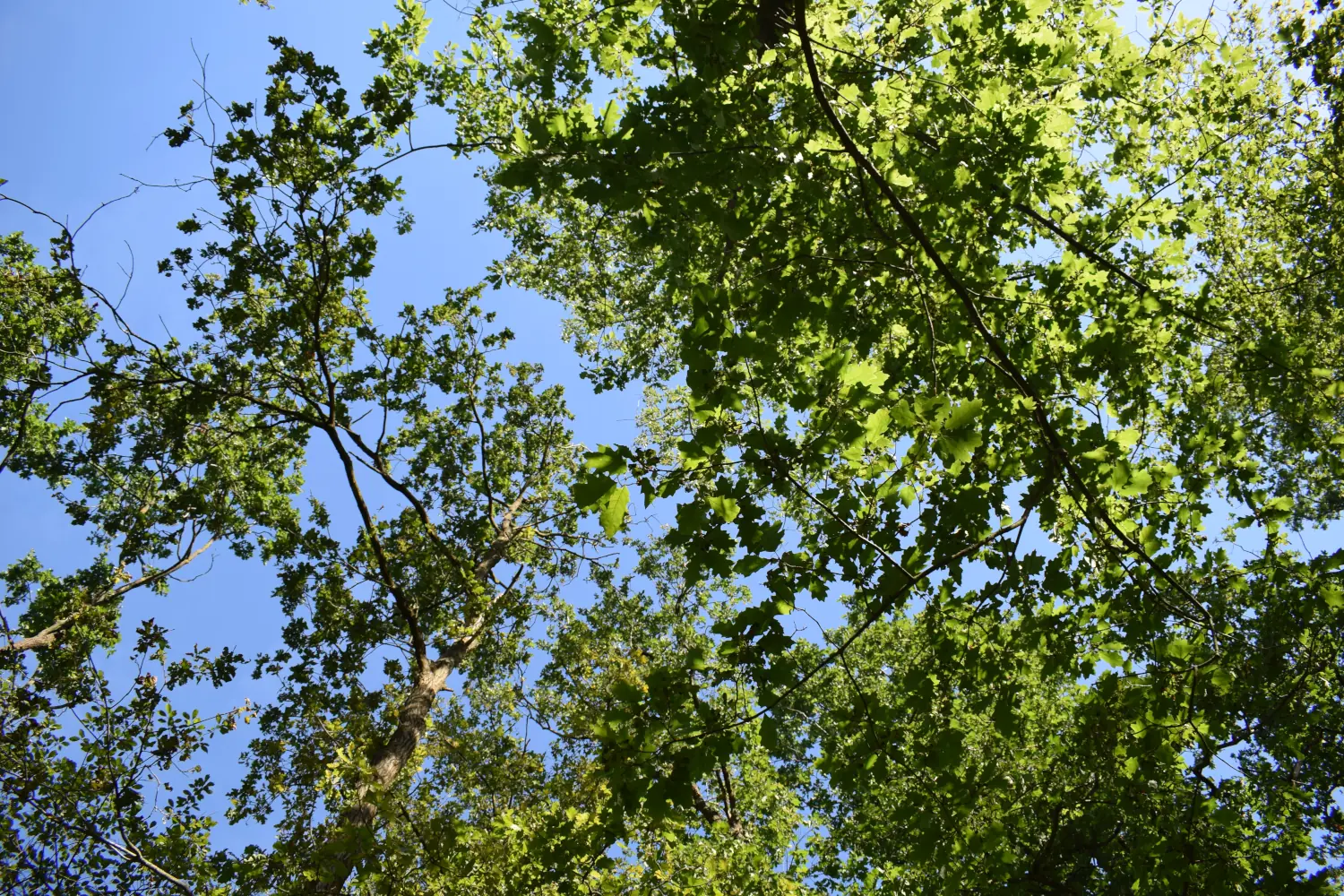
### Key feature: Neophytes (general)
In this forest section, we recorded a high number of neophytes. Neophytes are plants that were introduced by humans into areas where they did not naturally occur after 1492 – the year of the discovery of the Americas by Christopher Columbus. Half of the neophytes established here were introduced intentionally – most of these as ornamental plants (approximately 30% of all neophytes) and the remaining species as agricultural and forestry crops (20% of neophytes, e.g., potato, maize, and tomato). The rest were introduced unintentionally, for example as unwanted admixtures in seed lots. Only a few introduced species can survive independently in our climate, and even fewer are strongly spreading here. However, after their introduction, strongly spreading species can lead to problems.
By the way: alien plants that were introduced before 1492 are called archaeophytes.
Read more on the [Website of the State Office for the Environment Bavaria](https://www.lfu.bayern.de/natur/neobiota/neophyten/index.htm)
### Forest profile

#### Coverage of deadwood
**Large deadwood:** standing 0 %, lying down 0 %
**Medium deadwood:** standing 1 %, lying down 10 %
**Fine deadwood:** 5 %
**Rootstocks:** 13 pcs
*Number of old trees (BHD > 80cm):* 0
*Number of habitat trees:* *1*

#### Cover tree layers
**Tree layer 1:** 30 % (Betula pendula, Quercus rubra, Quercus petraea)
**Tree layer 2:** 20 % (Carpinus betulus, Prunus spinosa, Prunus serotina, Quercus petraea, Prunus avium)
**Tree layer 3:** 80 % (Symphoricarpos albus, Prunus serotina)
**Herb layer:** 5 % (Carex hirta, Brachypodium sylvaticum)
**Growth classes:** 4

#### Other Information
**Neophytes:** high (Quercus rubra, Symphoricarpos albus, Prunus serotina)
**Relative crown distance:** loose
**Mean crown defoliation:** 41 %
## Dölauer Heide - Area 6a
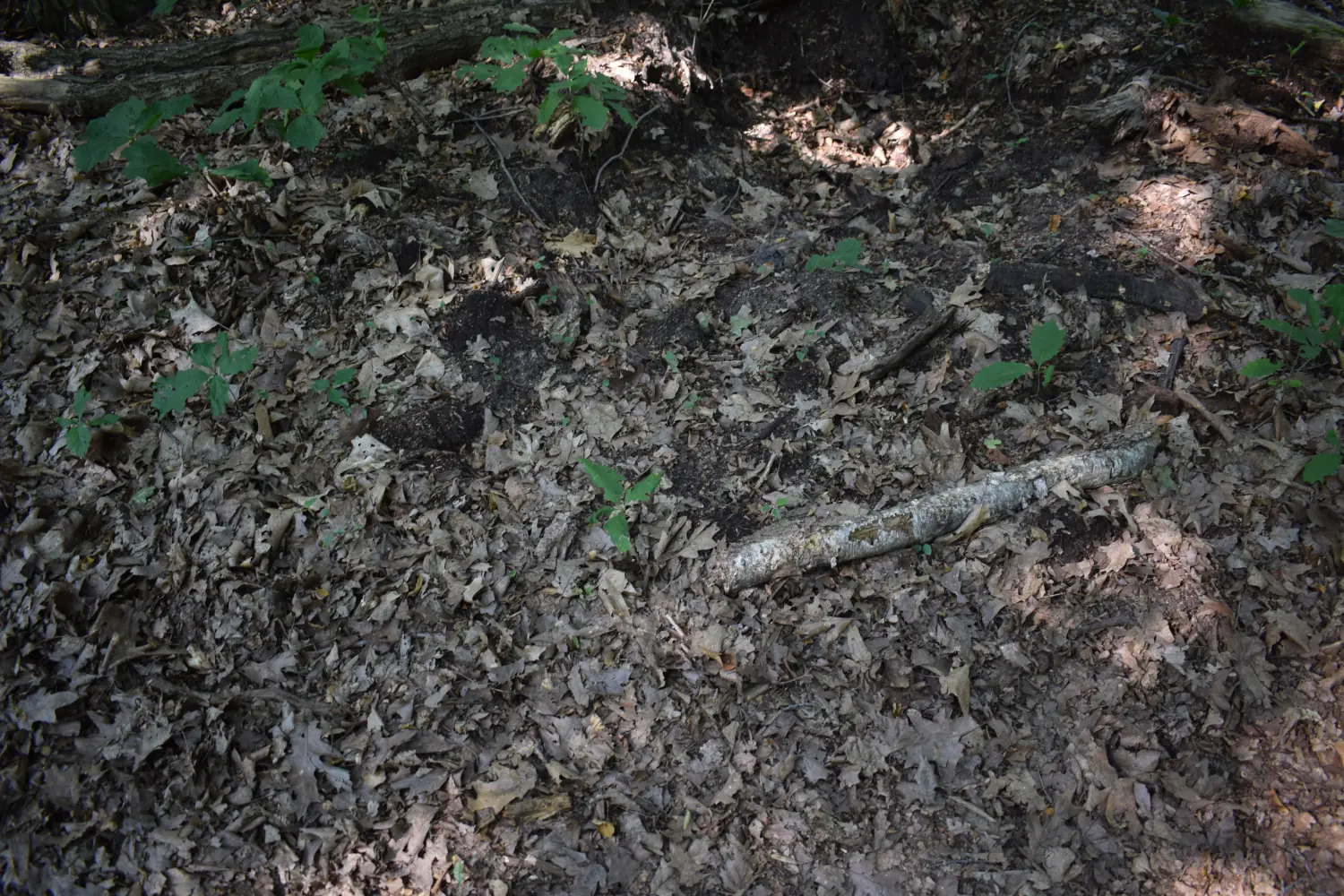 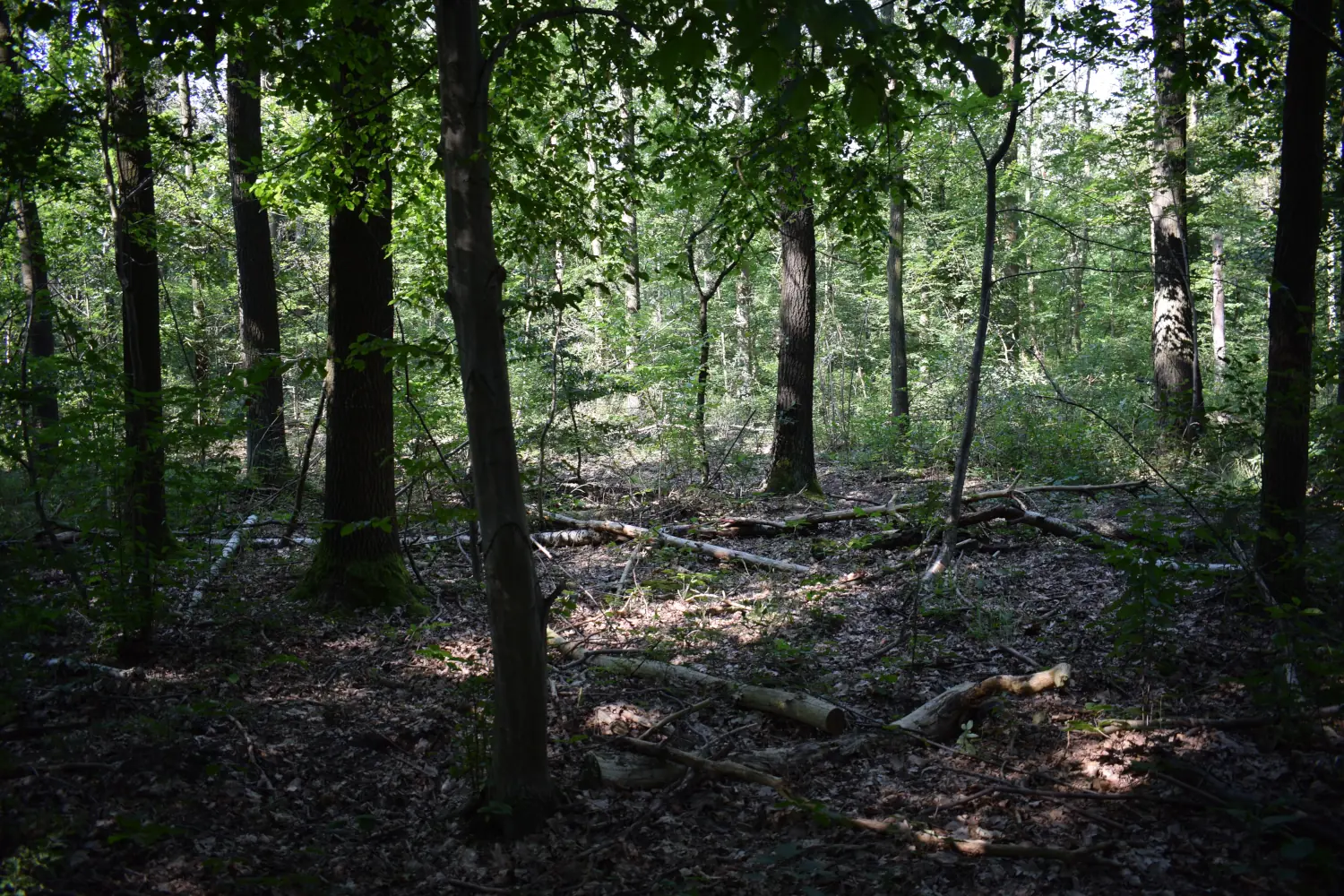 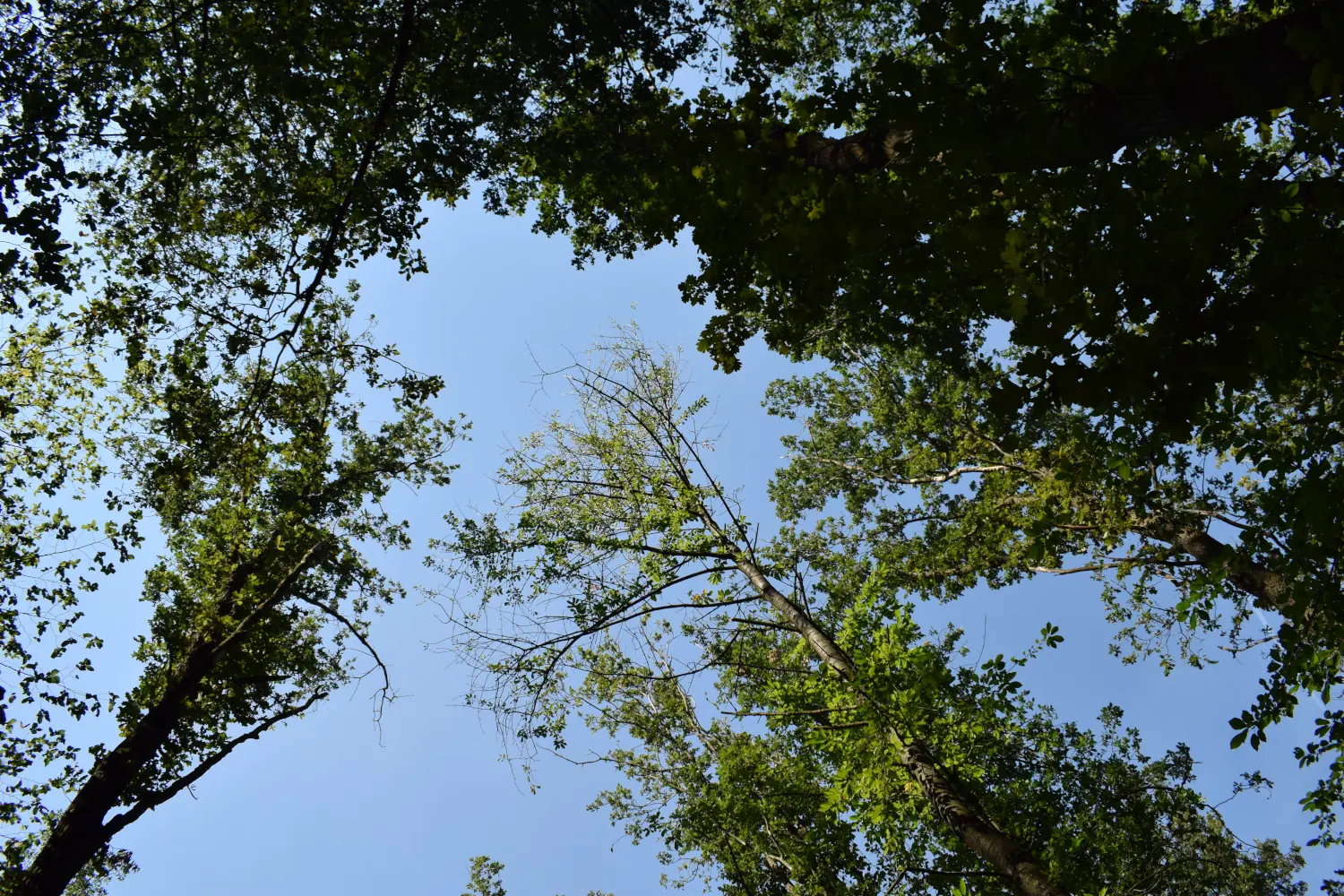
### Key feature: Canopy density
In this forest section, the trees had, on average, an open canopy density. Canopy density is a measure of stand density and describes how closely tree crowns are spaced within a stand. The scale ranges from 1) crowded, where crowns interlock, through 3) loose, with a crown distance of up to one-third of the crown diameter, to 6) very spacious, where the distance is greater than one crown diameter. Canopy density influences both the competitive conditions among trees and the intensity of environmental impacts on individual trees. A higher canopy density may potentially influence crown thinning.
You can find more informationen [here](https://www.tuexenia.de/publications/tuexenia/Tuexenia_2025_NS_045_0073-0102.pdf).
### Forest profile

#### Coverage of deadwood
**Large deadwood:** standing 0 %, lying down 0 %
**Medium deadwood:** standing 0 %, lying down 5 %
**Fine deadwood:** 5 %
**Rootstocks:** 13 pcs
*Number of old trees (BHD > 80cm):* 0
*Number of habitat trees:* 0

#### Cover tree layers
**Tree layer 1:** 60 % (Quercus petraea)
**Tree layer 2:** 30 % (Carpinus betulus)
**Tree layer 3:** 30 % (Ligustrum vulgare, Carpinus betulus, Fagus sylvatica, Quercus rubra, Symphoricarpos albus, Prunus serotina)
**Herb layer:** 5 % (Brachypodium sylvaticum)
**Growth classes:** 5

#### Other Information
**Neophytes:** low (Quercus rubra, Symphoricarpos albus, Prunus serotina)
**Relative crown distance:** loose
**Mean crown defoliation:** 41 %
## Dölauer Heide - Area 8a
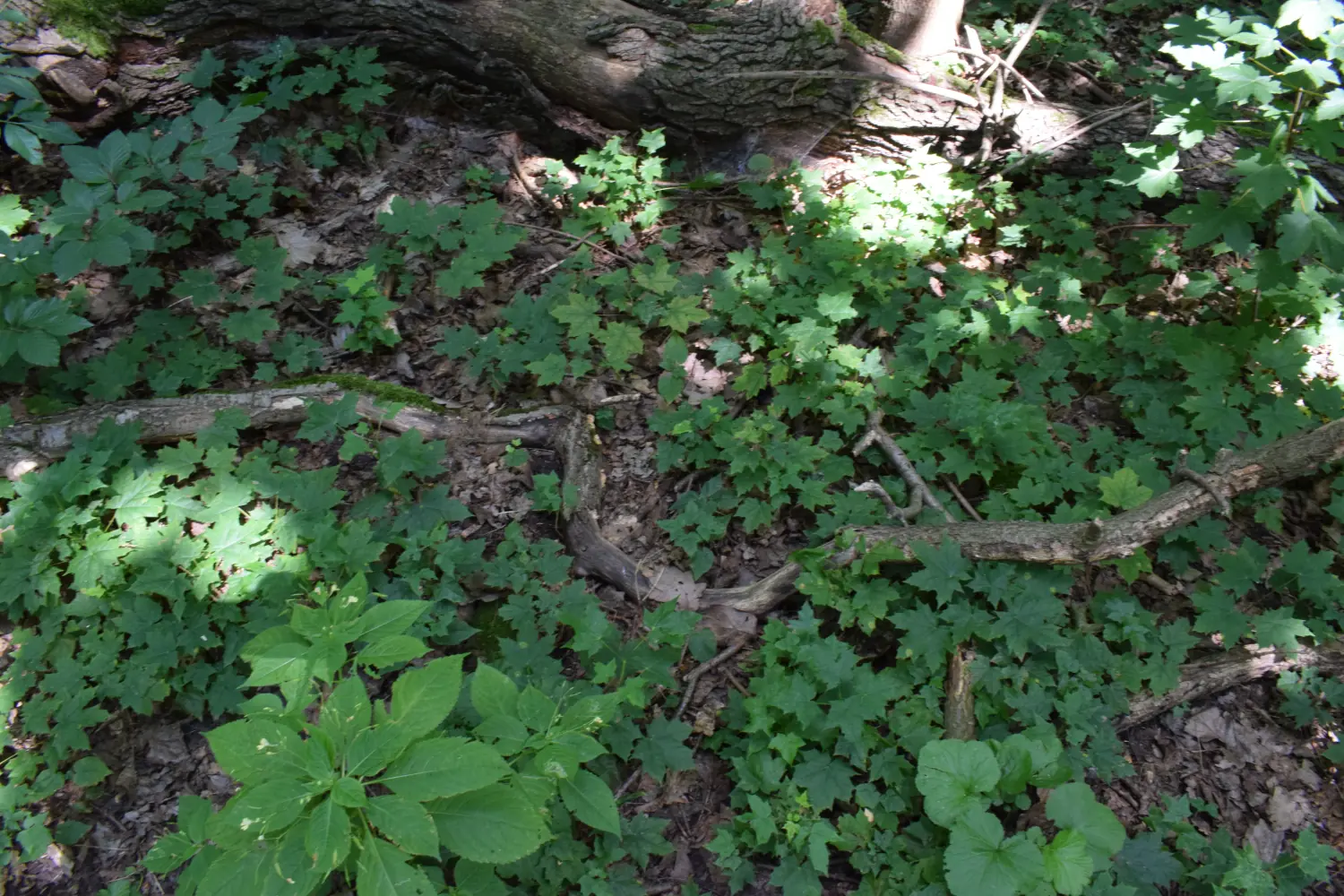 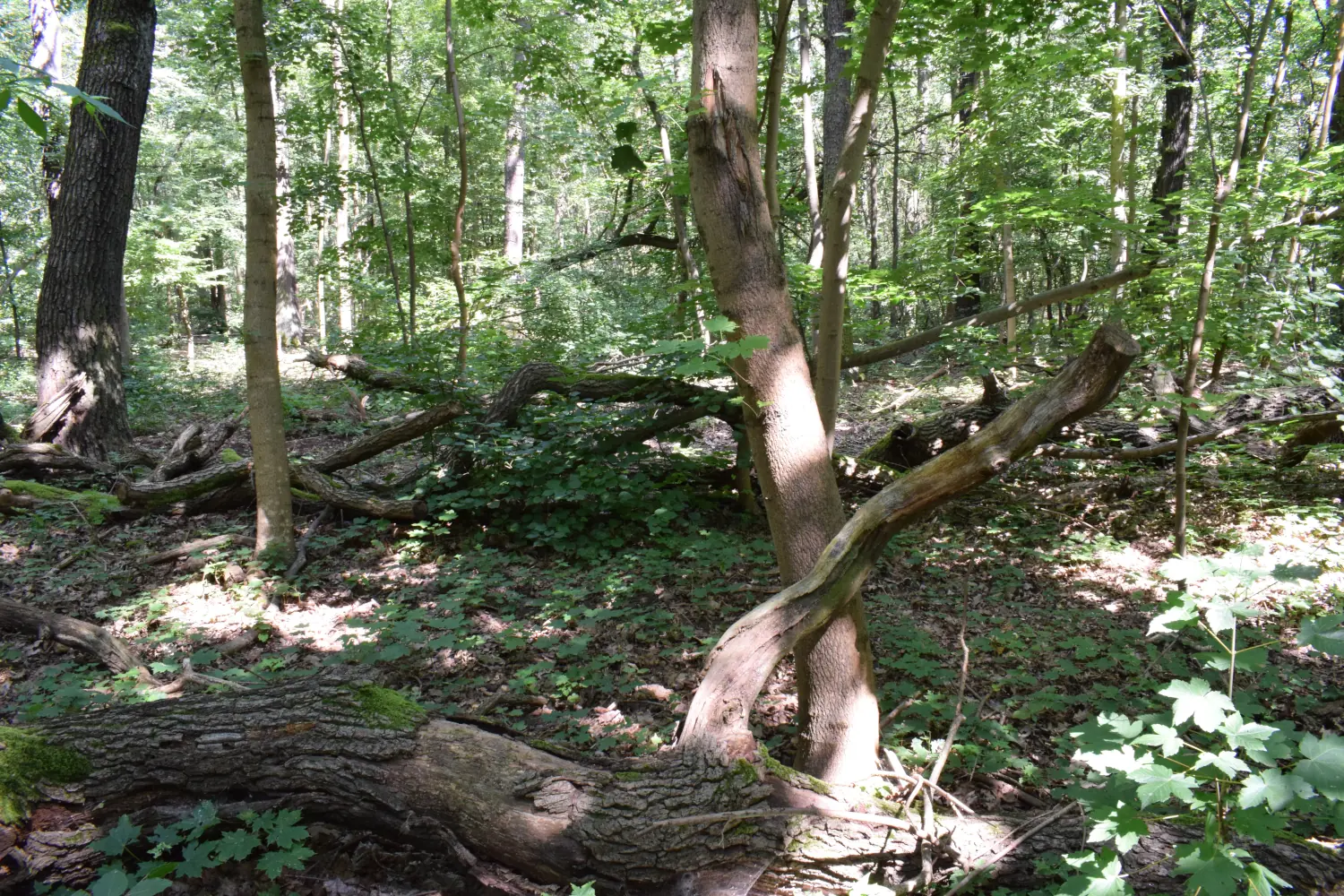 
### Key feature: Structural diversity
This forest section is characterised by particularly high structural richness. But what does actually contribute to structural diversity in forests? Key factors include tree species diversity, a multi-layered canopy structure, a range of different tree dimensions and age classes, deadwood, habitat trees, ditches, ponds, and microhabitats such as cavities in tree trunks. Over the past decade, German forests have, on average, become more structurally diverse.
Mixed-species forests now cover 79% of the forest area. 77 % of forests consist of two or more canopy layers. There are 7% more broadleaved forests than in 2012. These developments are primarily due to active forest conversion and thus to efforts aimed at enhancing the adaptive capacity of forests to climate change.
More [information](https://www.bmel.de/DE/themen/wald/wald-in-deutschland/bundeswaldinventur.html) is available in the results of the fourth federal forest inventory.
### Forest profile

#### Coverage of deadwood
**Large deadwood:** standing 1 %, lying down 0 %
**Medium deadwood:** standing 1 %, lying down 5 %
**Fine deadwood:** 11 %
**Rootstocks:** 2 pcs
*Number of old trees (BHD > 80cm):* 0
*Number of habitat trees:* *1*

#### Cover tree layers
**Tree layer 1:** 40 % (Quercus petraea)
**Tree layer 2:** 60 % (Acer platanoides, Tilia cordata)
**Tree layer 3:** 60 % (Fraxinus excelsior, Acer platanoides, Tilia cordata)
**Herb layer:** 10 % (Geum urbanum, Grasses)
**Growth classes:** 5

#### Other Information
**Unintended effects of forest operations:** low (Trail)
**Relative crown distance:** loose
**Mean crown defoliation:** 48 %
## Dölauer Heide - Area 9a
 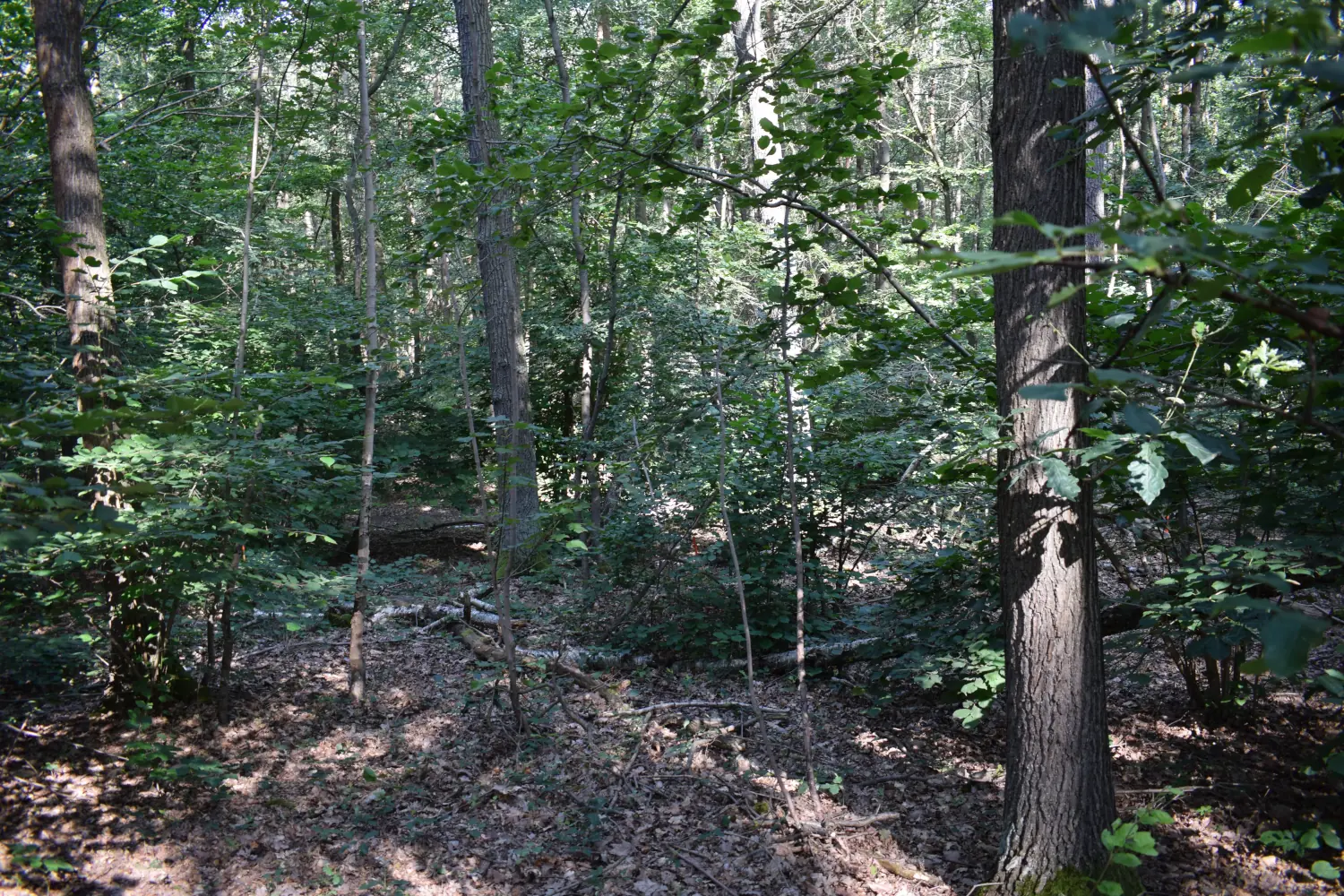 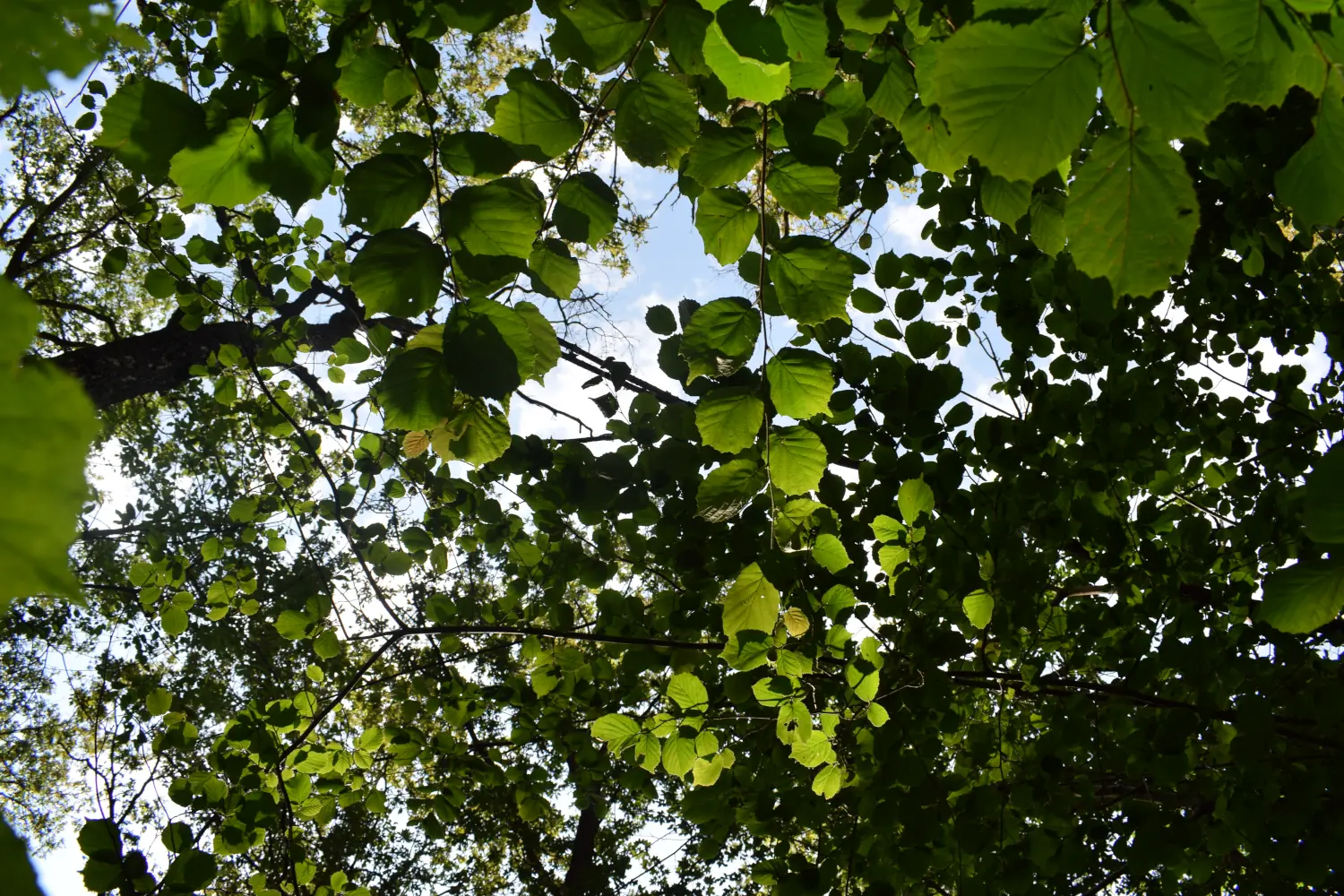
### Key feature: Tree species
This forest section consists of several tree species. But what are the most common tree species in Germany? According to the results of the Fourth National Forest Inventory, the tree species currently dominating in German forests are Pinus sylvestris (22%), Picea abies (21%), Fagus sylvatica (17%), and Quercus robur/Q. petraea (12%). The remaining 28% consists of a mixture of 47 further tree species and species groups. Diverse tree species compositions contribute to a healthier and more resilient forest, enhancing the ecosystem’s capacity to respond to environmental change.
You can find even more interesting facts explained in [Topics](https://www.bmleh.de/DE/themen/wald/wald-in-deutschland/bundeswaldinventur.html) and [Lebensraum](https://www.bundeswaldinventur.de/vierte-bundeswaldinventur-2022/lebensraum-wald#c56994) of the Federal Forest Inventory.
### Forest profile

#### Coverage of deadwood
**Large deadwood:** standing 0 %, lying down 0 %
**Medium deadwood:** standing 2 %, lying down 10 %
**Fine deadwood:** 5 %
**Rootstocks:** 4 pcs
*Number of old trees (BHD > 80cm):* 0
*Number of habitat trees:* 0

#### Cover tree layers
**Tree layer 1:** 40 % (Carpinus betulus, Quercus petraea)
**Tree layer 2:** 5 % (Acer pseudoplatanus, Fraxinus excelsior, Carpinus betulus, Prunus avium, Tilia cordata)
**Tree layer 3:** 50 % (Corylus avellana, Carpinus betulus, Fagus sylvatica, Quercus petraea)
**Herb layer:** 10 % (Rubus, Poa nemoralis)
**Growth classes:** 6

#### Other Information
no impairments found
**Relative crown distance:** closed
**Mean crown defoliation:** 59 %
## Dölauer Heide - Area 11a
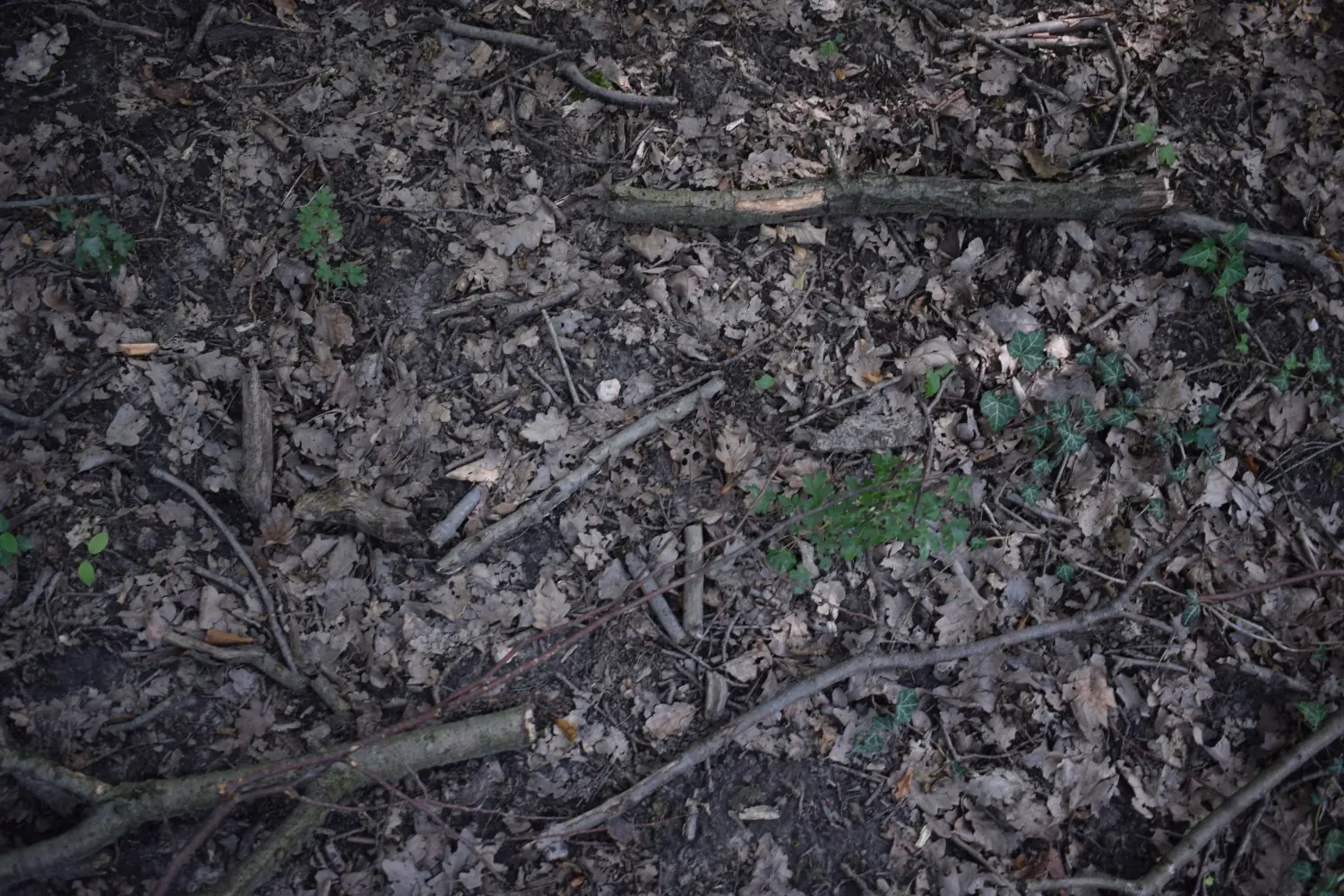 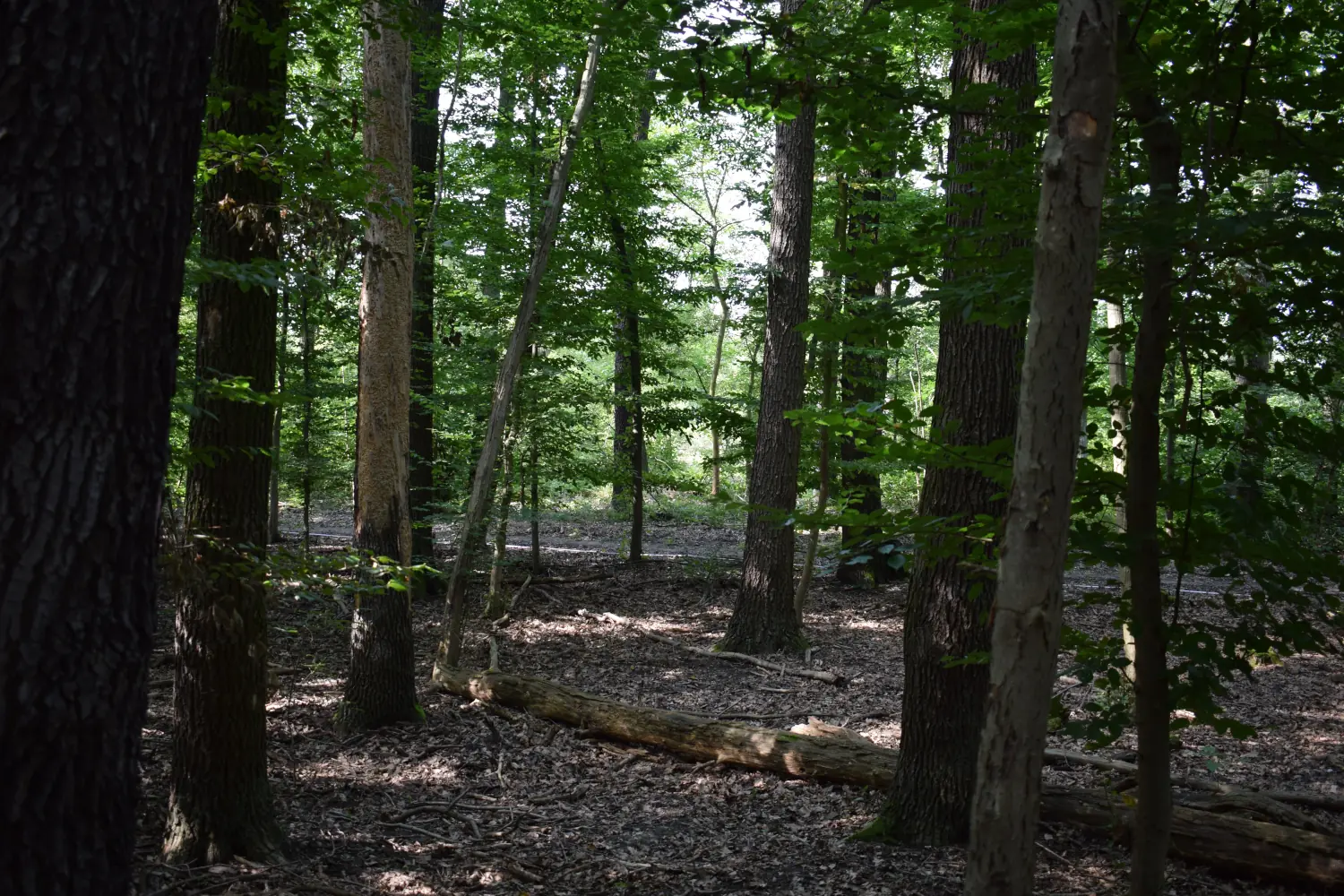 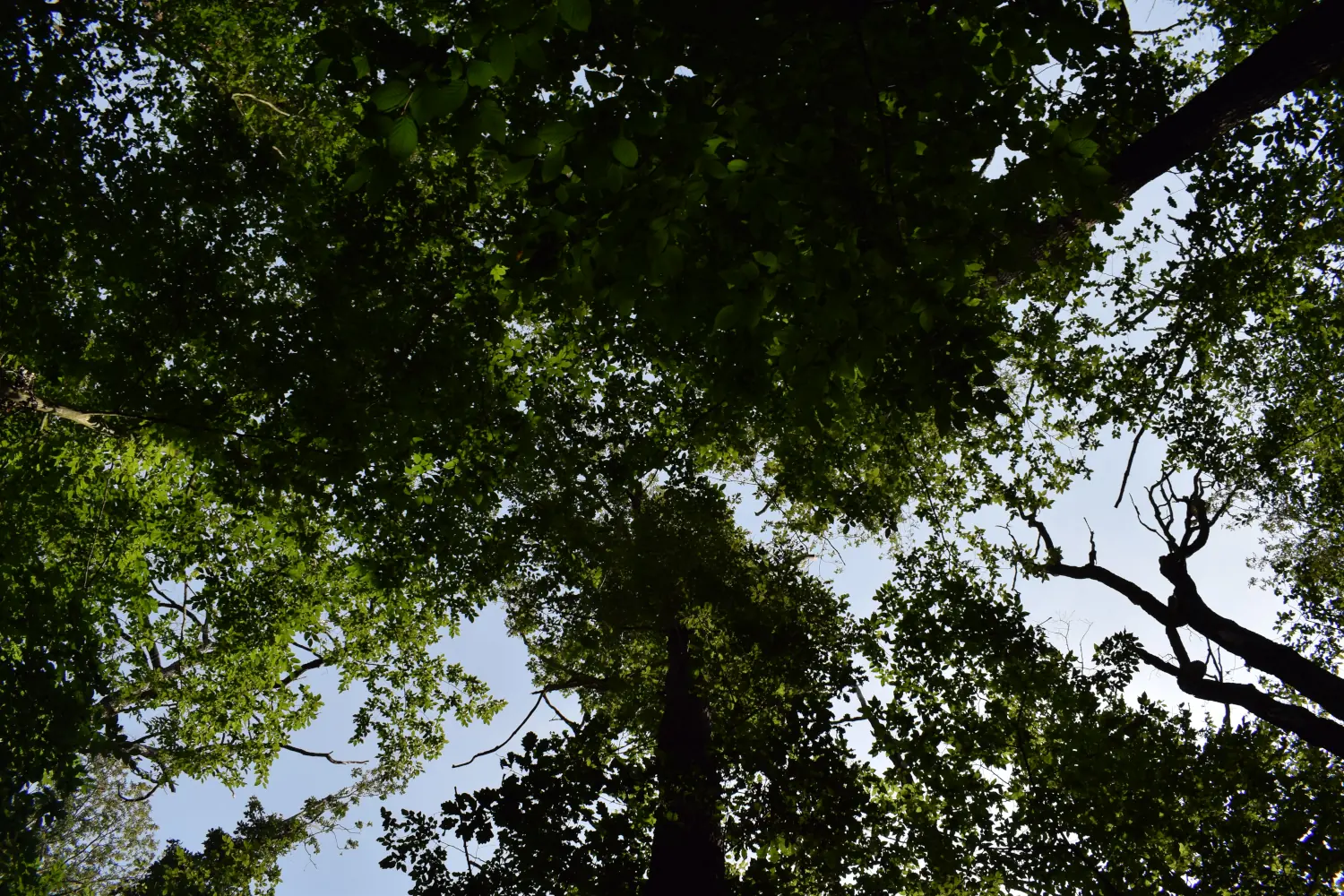
### Key feature: (Standing) Deadwood
In this forest section, we recorded standing deadwood. Standing deadwood is of particular importance for many insects, birds, and mammals. Bird species such as stock doves, owls, and jackdaws, as well as mammals such as edible dormice and bats, find suitable shelter in woodpecker holes in old trees. The presence of deadwood thus supports a wide variety of organisms and makes a crucial contribution to the ecological diversity of the forest.
The website ["waldwissen.net"](https://www.waldwissen.net/de/lebensraum-wald/naturschutz/totholz-im-wald) presents interesting facts about the [Totholz](https://forsterklaert.de/totholz).
### Forest profile

#### Coverage of deadwood
**Large deadwood:** standing 10 %, lying down 0 %
**Medium deadwood:** standing 11 %, lying down 5 %
**Fine deadwood:** 10 %
**Rootstocks:** 3 pcs
*Number of old trees (BHD > 80cm):* 0
*Number of habitat trees:* *1*

#### Cover tree layers
**Tree layer 1:** 20 % (Quercus petraea)
**Tree layer 2:** 70 % (Carpinus betulus)
**Tree layer 3:** 10 % (Corylus avellana, Carpinus betulus)
**Herb layer:** 5 % (Hedera helix, Brachypodium sylvaticum)
**Growth classes:** 3

#### Other Information
no impairments found
**Relative crown distance:** closed to loose
**Mean crown defoliation:** 81 %
## Dölauer Heide - Area 13a
### Key feature: Veteran trees → Germany's oldest tree
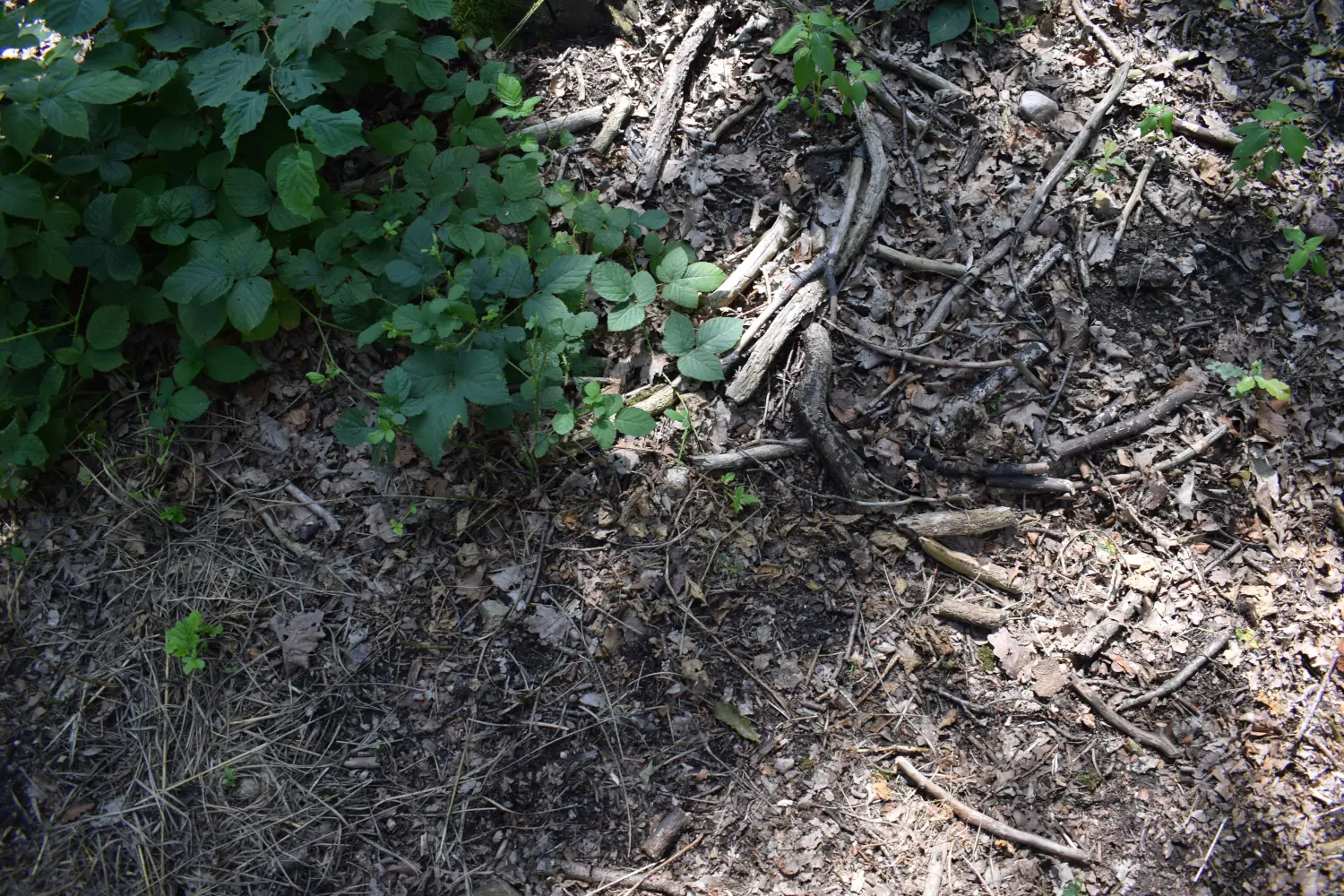
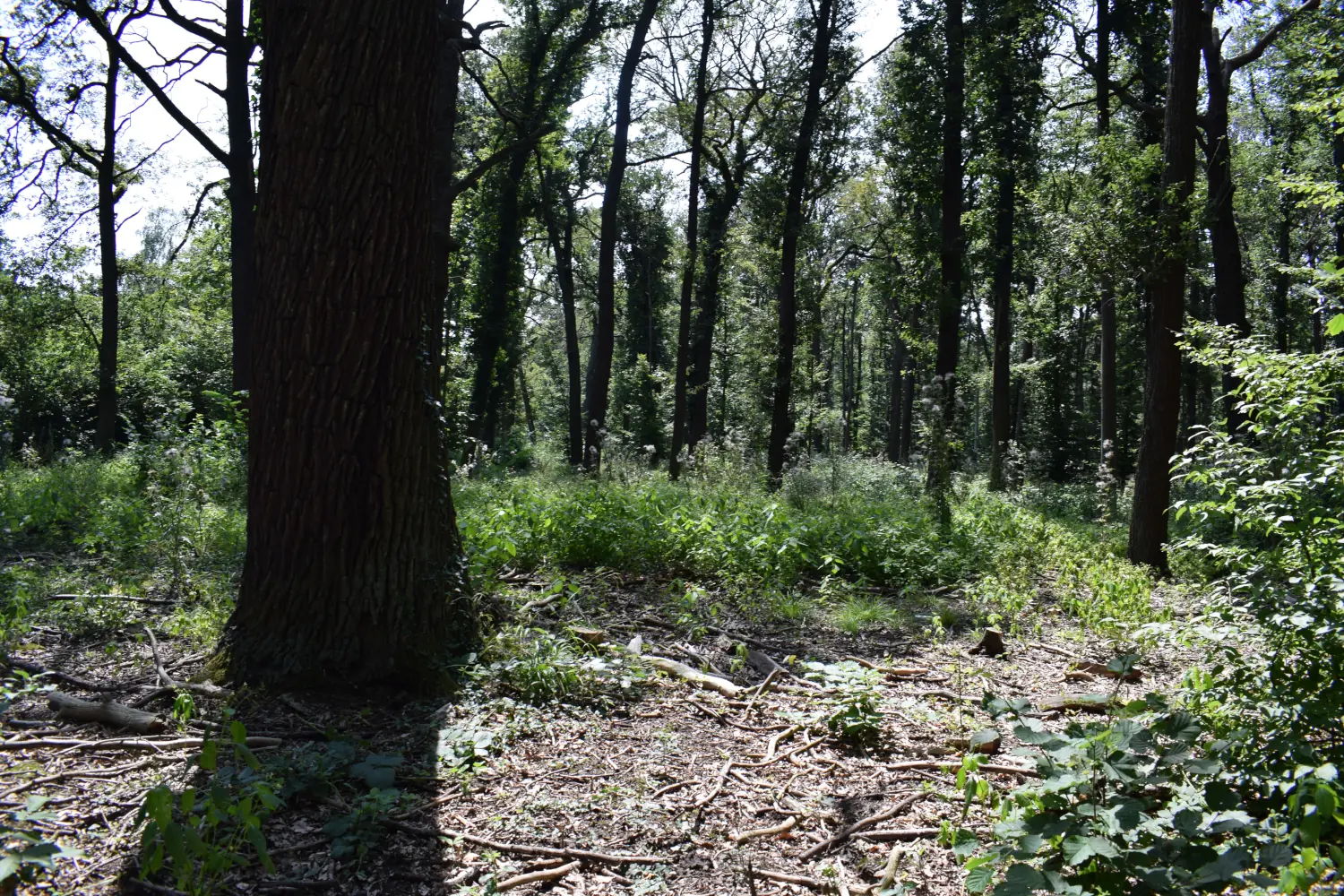
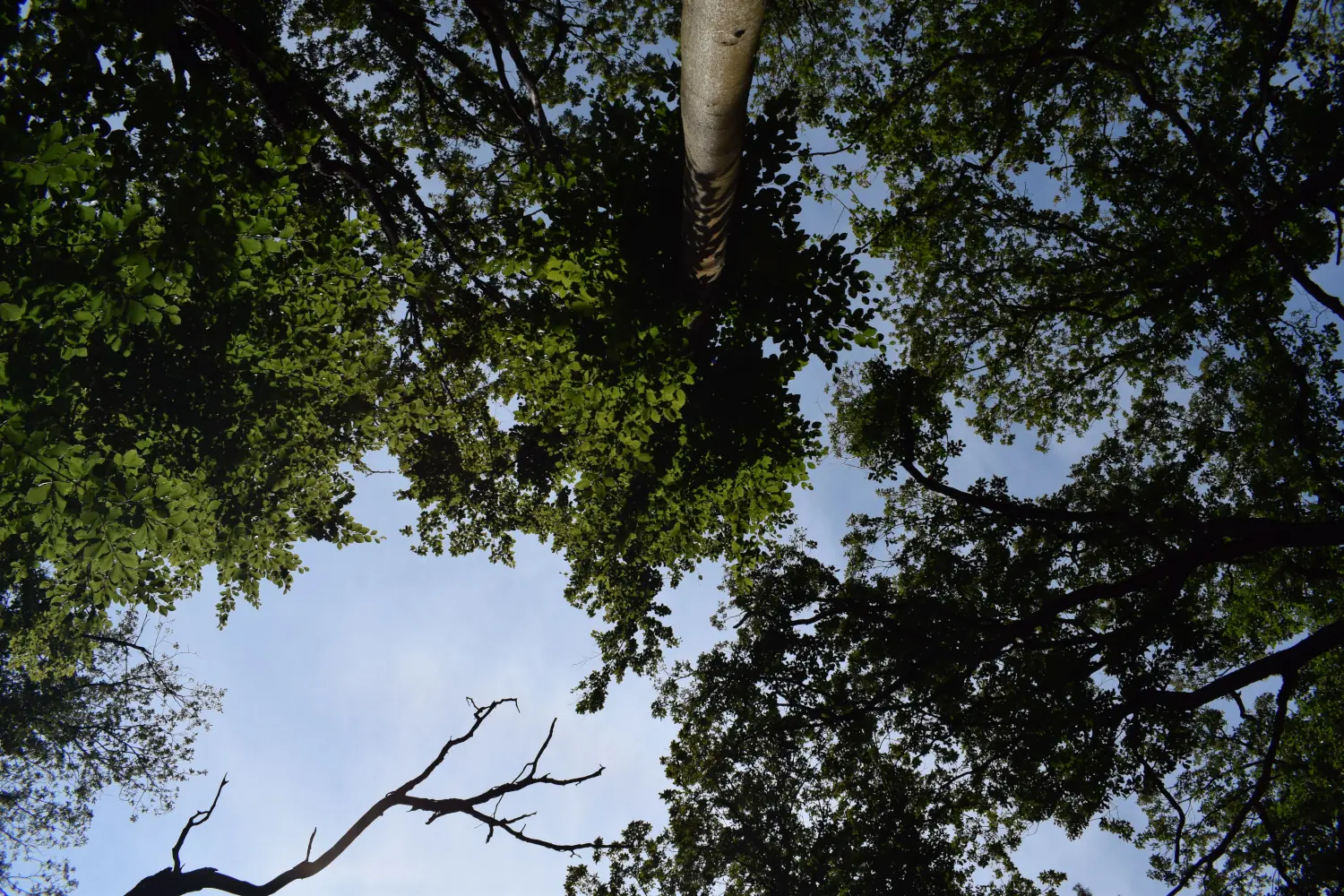
In this forest section, we found a veteran tree. Veteran trees are trees with a diameter at breast height (DBH) of more than 80 cm. The likely oldest tree in Germany is located in the Hessian municipality of Schenklengsfeld. It is a Tilia platyphyllos, estimated to be over 1,200 years old. However, age estimation of such an old tree can be tricky, even for experts. Over time, trunks can split and partially die back, as it is the case with the Tilia platyphyllos in Schenklengsfeld. Today, it consists of four stem sections, which together have a circumference of approximately 18 metres. The tree's crown diameter measures a full 25 metres. To ensure that this ancient tree survives for many more years, its heavy branches are supported by a beam framework maintained by the municipality.
The [Baumpflegeportal](https://www.baumpflegeportal.de/baumwissen/hoechster-dickster-aeltester-baum-deutschlands/), the [Forstpraxis](https://www.forstpraxis.de/deutschlands-aeltester-baum-1200-jahre-alte-linde-mittelalter-24063) and the [Gemeinde Schenklengsfeld](https://www.schenklengsfeld.de/verzeichnis/objekt.php?mandat=97354) provide more informationen about the oldest Tree.
### Forest profile

#### Coverage of deadwood
**Large deadwood:** standing 5 %, lying down 0 %
**Medium deadwood:** standing 1 %, lying down 1 %
**Fine deadwood:** 20 %
**Rootstocks:** 8 pcs
*Number of old trees (BHD > 80cm):* 0
*Number of habitat trees:* 0

#### Cover tree layers
**Tree layer 1:** 50 % (Fagus sylvatica, Quercus petraea)
**Tree layer 2:** 5 % (Fagus sylvatica)
**Tree layer 3:** 30 % (Corylus avellana, Prunus padus, Fagus sylvatica)
**Herb layer:** 30 % (Rubus, Hedera helix, Cirsium vulgare, Impatiens parviflora)
**Growth classes:** 7

#### Other Information
**Unintended effects of forest operations:** low (Logging trail)
**Disturbance indicator species:** moderate (Rubus, Calamagrostis epigejos)
**Neophytes:** moderate (Impatiens parviflora, Quercus rubra, Symphoricarpos albus)
**Relative crown distance:** closed
**Mean crown defoliation:** 38 %
## Dölauer Heide - Area 14a
 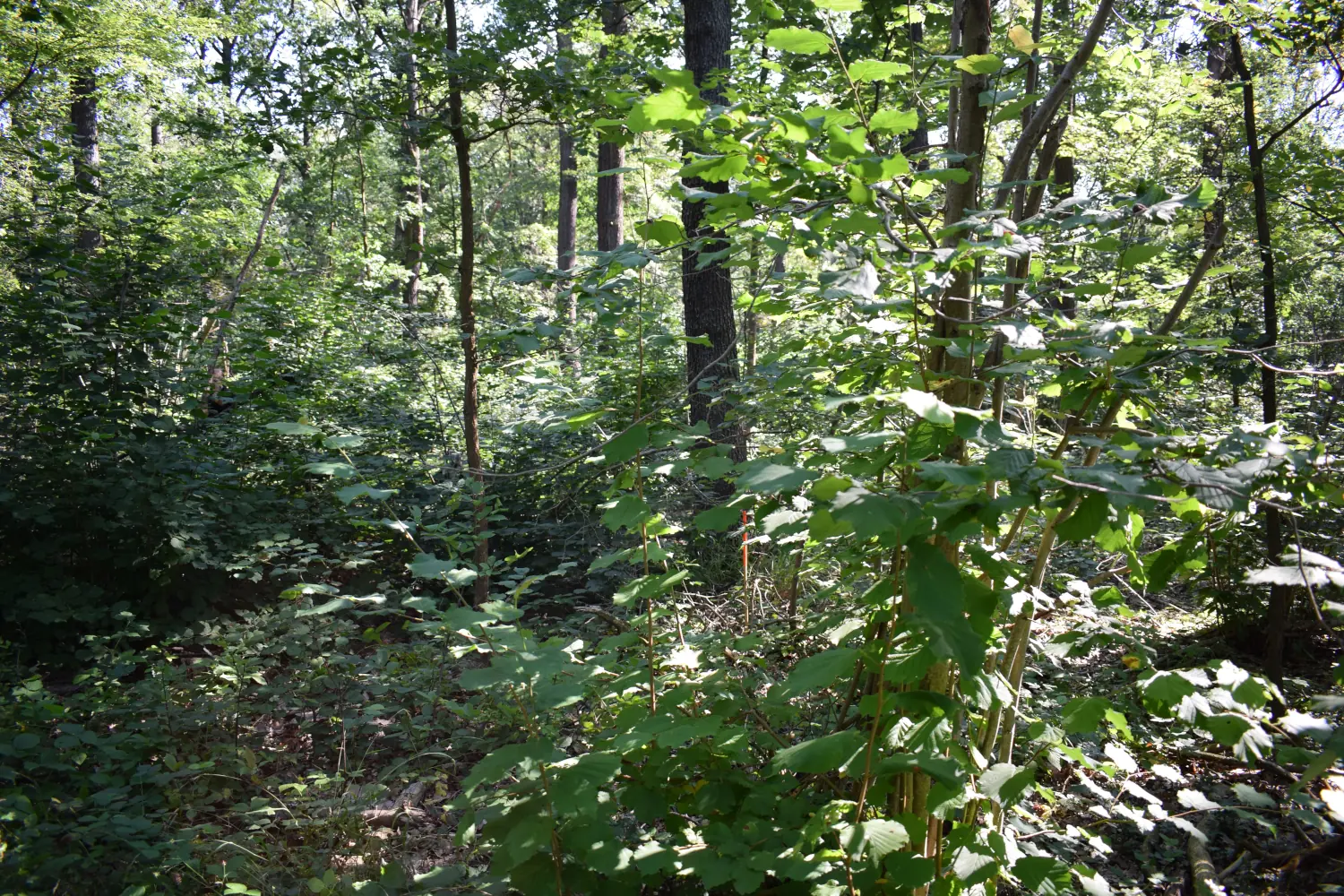 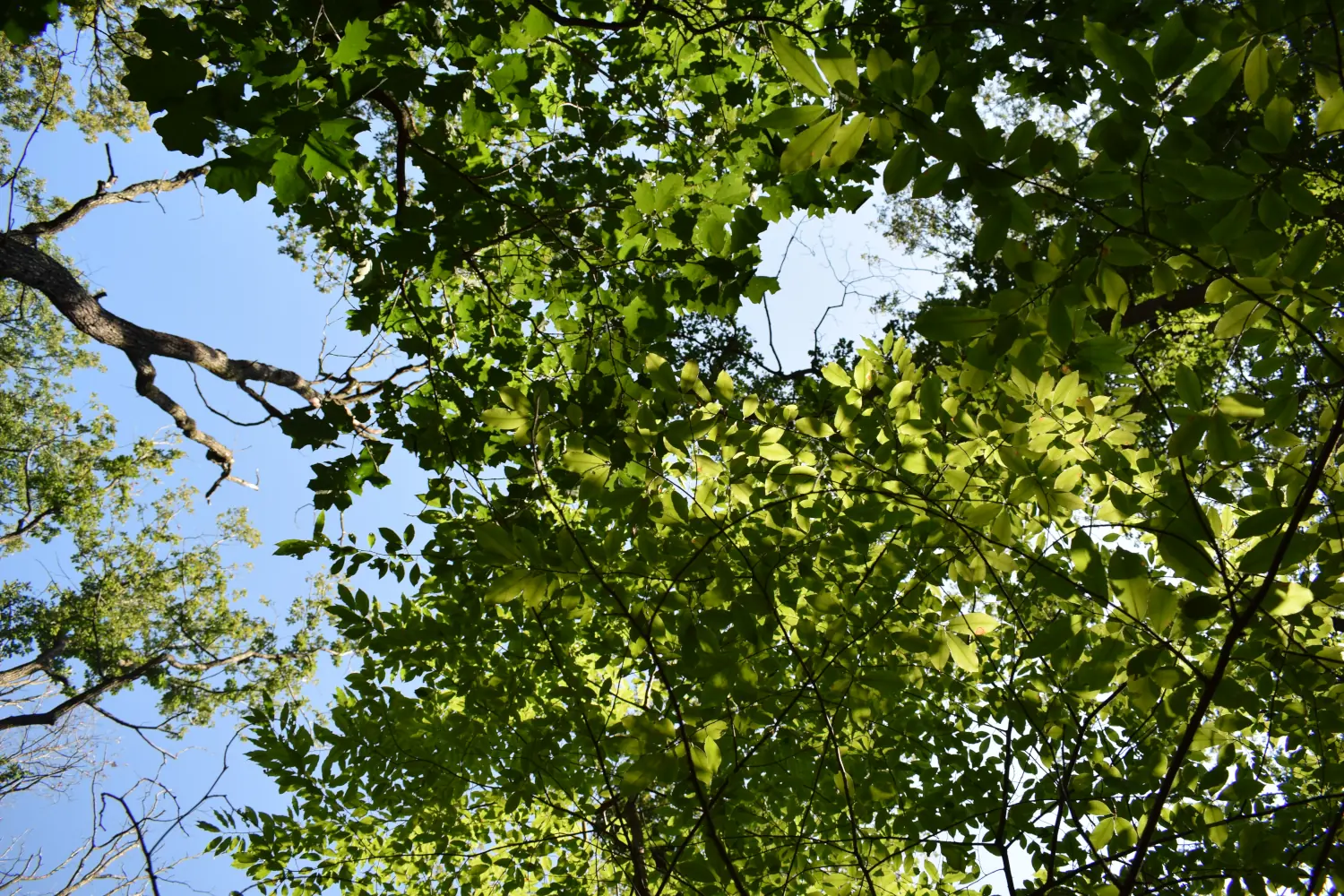
### Key feature: Mixed forest vs. pure stand
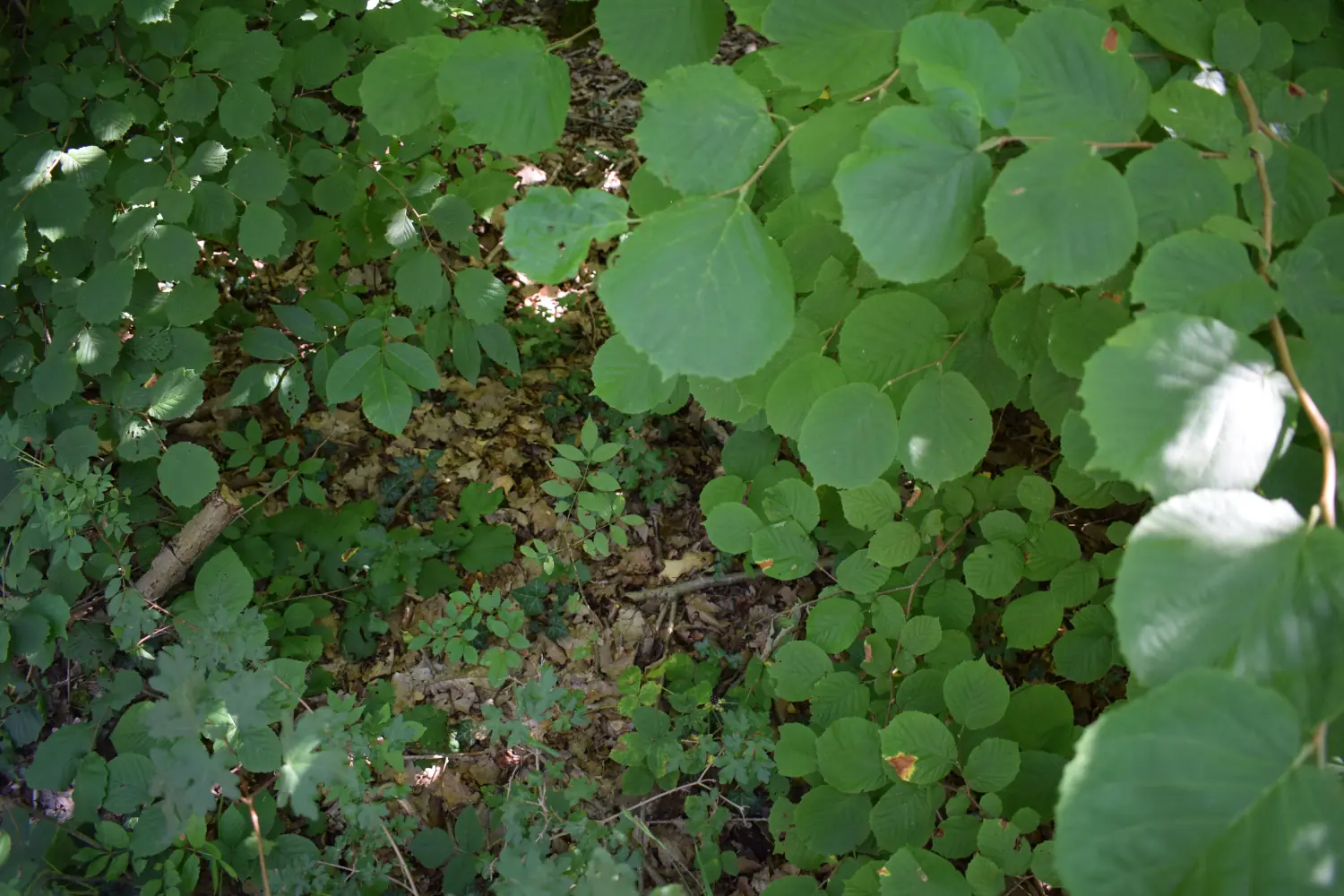
In this forest section, we find a pure stand of Quercus rubra. A mixed forest consists of a mixture of different tree species. Moreover, mixed forests consist of trees of different ages and diameters. The more diverse and near-natural the forest, the better its chances of responding successfully to environmental changes, such as those caused by climate change.
Compared to pure stands (forests consisting of only a single tree species of the same age), mixed forests are more resilient with regard to storms, drought, or insect outbreaks. Insects that specialise on certain tree species, for example bark beetle species, find it more difficult to spread rapidly and massively in mixed forests. Figuratively speaking: the nearest breeding tree is then often not the direct neighbour, but more difficult to reach. The diversity of tree species reduces the risk of large-scale dieback, as observed in many pure spruce forests. Mixed forests also promote the development of a balanced and vital forest soil, which forms the base for a healthy forest. The variety of species and structures in these forests creates more diverse habitats for numerous animal and plant species. Currently, 79% of the forest area in Germany consists of mixed forests.
The [Schutzgemeinschaft Deutscher Wald](https://www.sdw.de/ueber-den-wald/waldwissen/mischwaelder/) and the [Bundeswaldinventur](https://www.bmel.de/DE/themen/wald/wald-in-deutschland/bundeswaldinventur.html) provide more interesting information.
### Forest profile

#### Coverage of deadwood
**Large deadwood:** standing 0 %, lying down 0 %
**Medium deadwood:** standing 1 %, lying down 0 %
**Fine deadwood:** 10 %
**Rootstocks:** 5 pcs
*Number of old trees (BHD > 80cm):* 0
*Number of habitat trees:* 0

#### Cover tree layers
**Tree layer 1:** 30 % (Quercus petraea)
**Tree layer 2:** 10 % (Quercus rubra, Quercus petraea, Tilia cordata)
**Tree layer 3:** 80 % (Acer campestre, Corylus avellana, Quercus rubra, Symphoricarpos albus, Tilia cordata)
**Herb layer:** 10 % (Rubus, Brachypodium sylvaticum)
**Growth classes:** 5

#### Other Information
**Disturbance indicator species:** low (Rubus)
**Neophytes:** moderate (Quercus rubra, Symphoricarpos albus)
**Relative crown distance:** closed to loose
**Mean crown defoliation:** 61 %
## Dölauer Heide - Area 19a
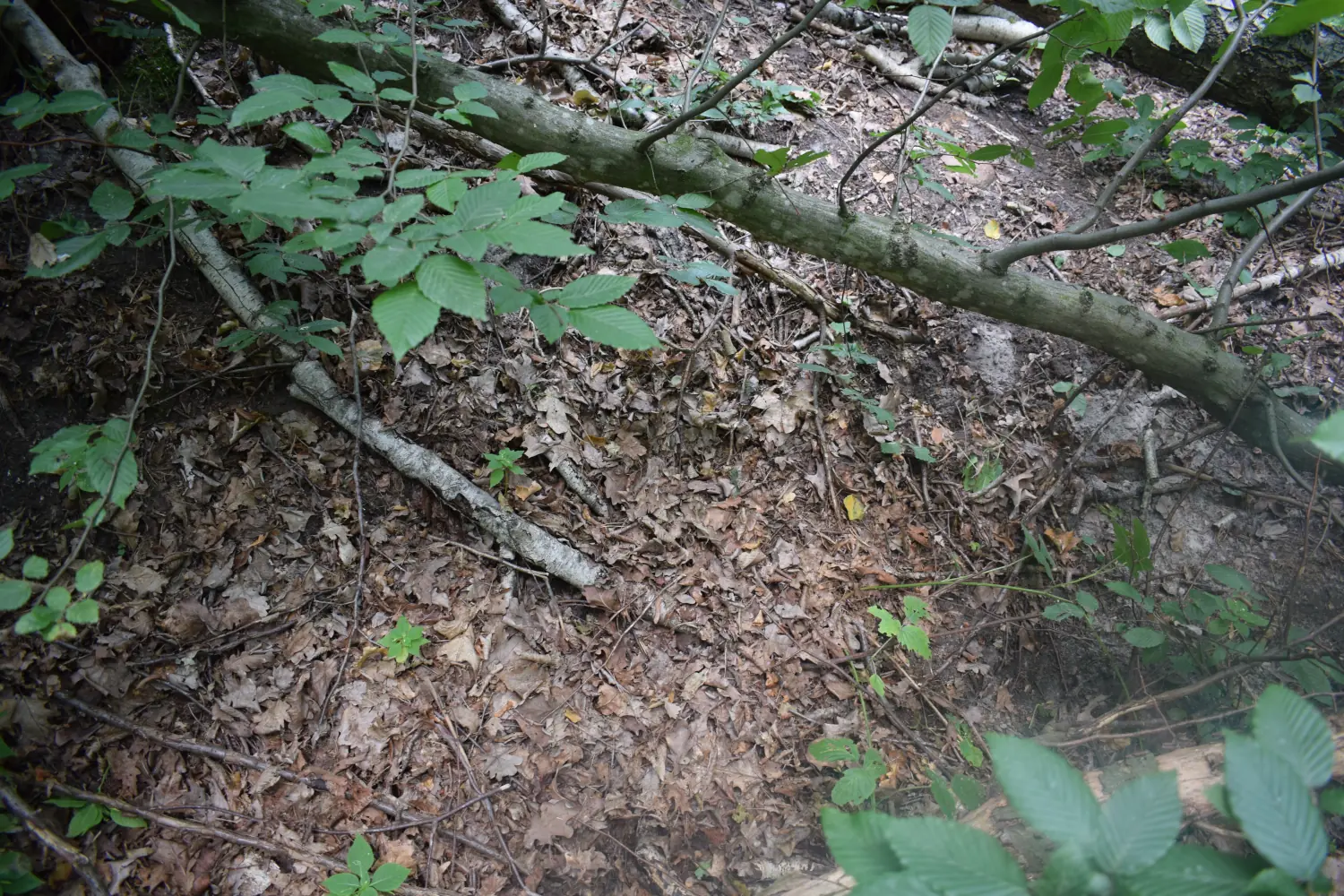 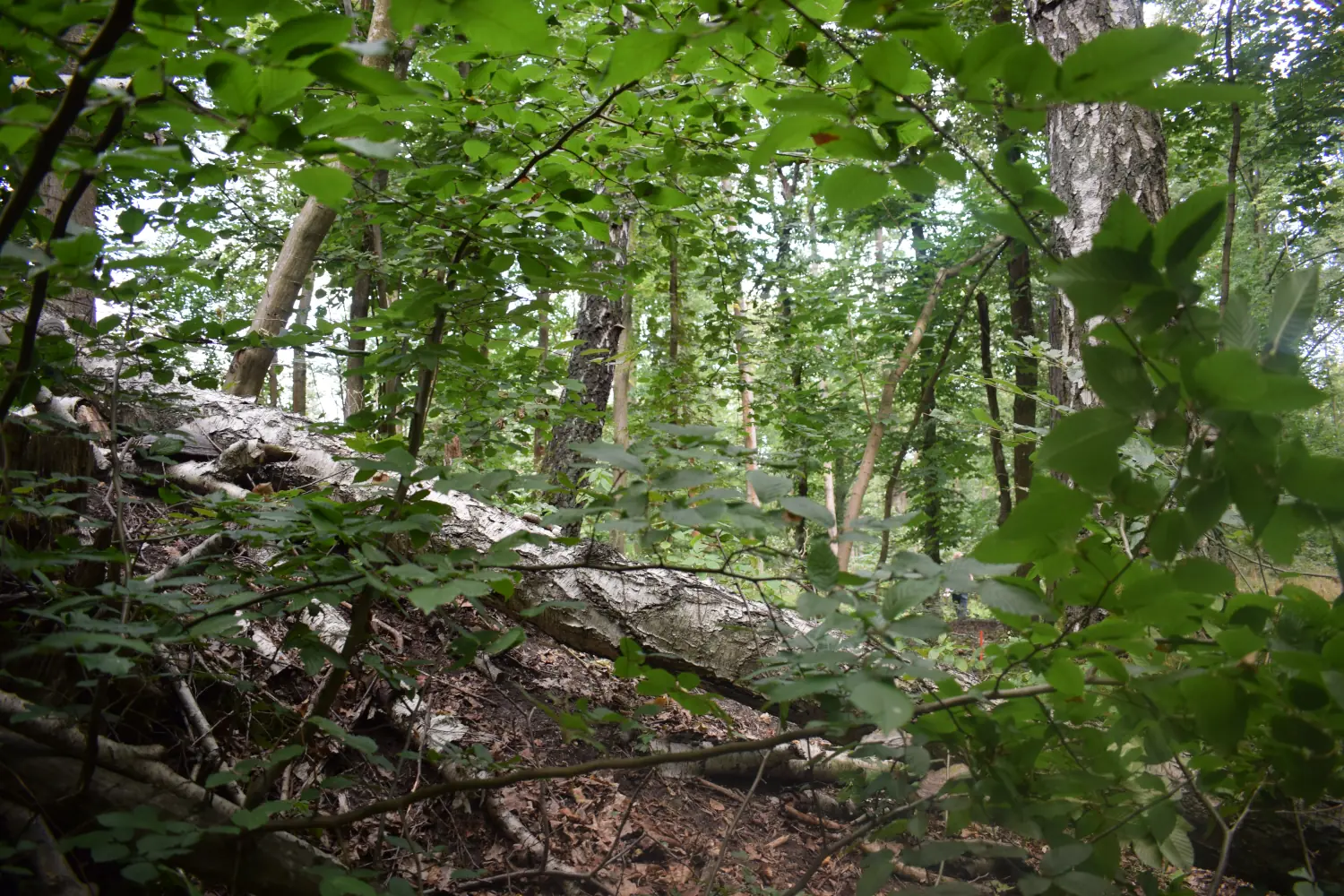 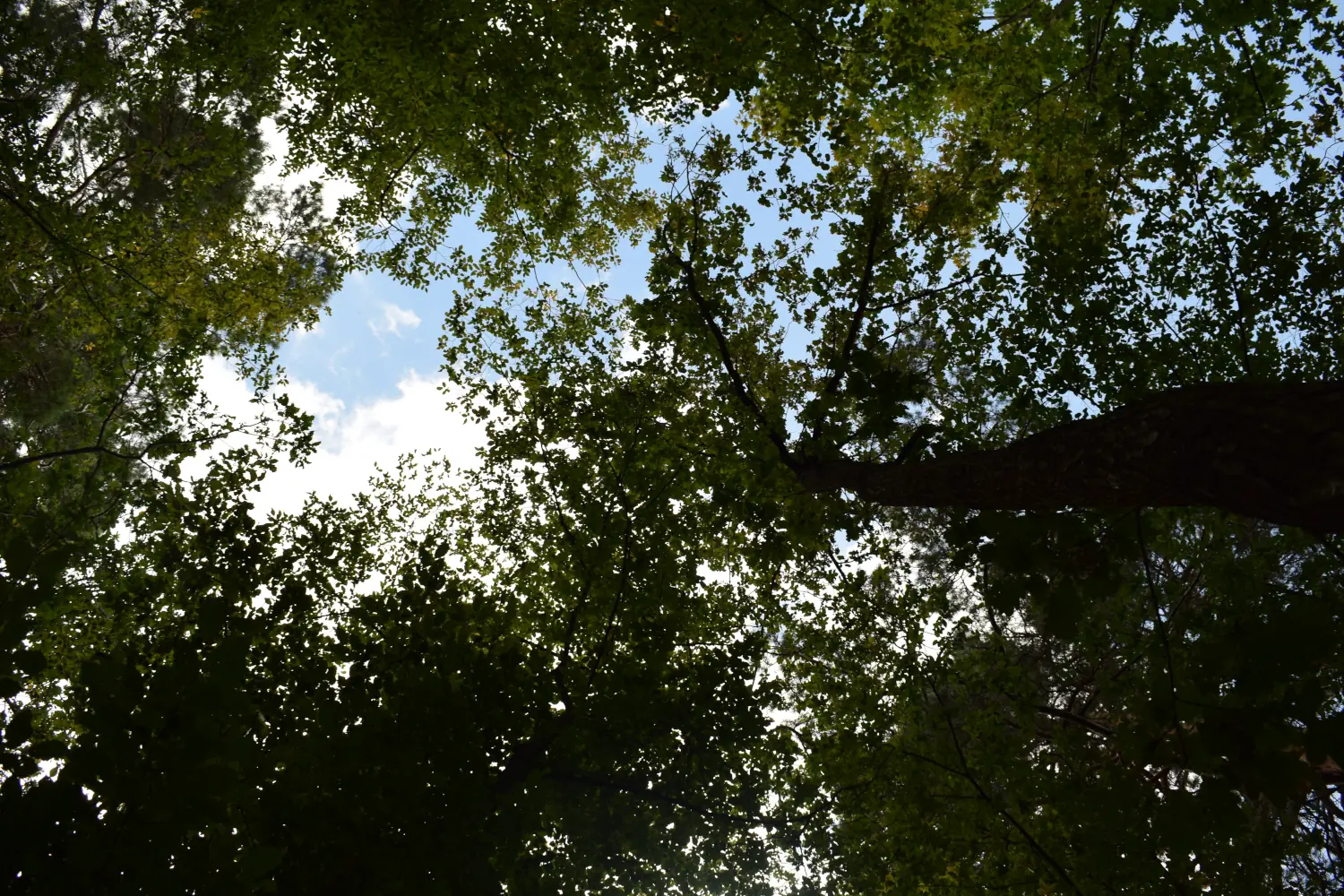
### Key feature: Layers („storeys of the forest“)
This forest section is comparatively rich in structure. In addition to deadwood, the various layers or „storeys“ of the forest also contribute to structural diversity. Examining the vertical structure of the woodland reveals the following layers: root layer, moss layer, herb layer, shrub layer, and canopy layer. Each of these layers is associated with distinct environmental conditions and characteristics, providing habitat for a variety of plant, fungal, and animal species. By the way: So far research on the canopy layer remains comparatively limited (Wildermuth 2024) ([Wildermuth 2024](http://dx.doi.org/10.53846/goediss-10457)).
Read more in the flyer [„Unser Wald“](https://www.bmleh.de/SharedDocs/Downloads/DE/Broschueren/unser-wald-2022.html)
### Forest profile

#### Coverage of deadwood
**Large deadwood:** standing 0 %, lying down 0 %
**Medium deadwood:** standing 6 %, lying down 10 %
**Fine deadwood:** 5 %
**Rootstocks:** 2 pcs
*Number of old trees (BHD > 80cm):* 0
*Number of habitat trees:* 0

#### Cover tree layers
**Tree layer 1:** 15 % (Quercus petraea, Pinus sylvestris)
**Tree layer 2:** 60 % (Carpinus betulus, Acer platanoides, Quercus petraea, Tilia cordata)
**Tree layer 3:** 20 % (Corylus avellana, Ligustrum vulgare, Mahonia aquifolium, Tilia cordata)
**Herb layer:** 20 % (Rubus, Glechoma hederacea, Impatiens parviflora, Dactylis polygama, Brachypodium sylvaticum)
**Growth classes:** 6

#### Other Information
**Disturbance indicator species:** low (Rubus)
**Neophytes:** high (Impatiens parviflora, Mahonia aquifolium, Symphoricarpos albus, Prunus serotina)
**Relative crown distance:** loose to sparse
**Mean crown defoliation:** 50 %
## Dölauer Heide - Area 20a
 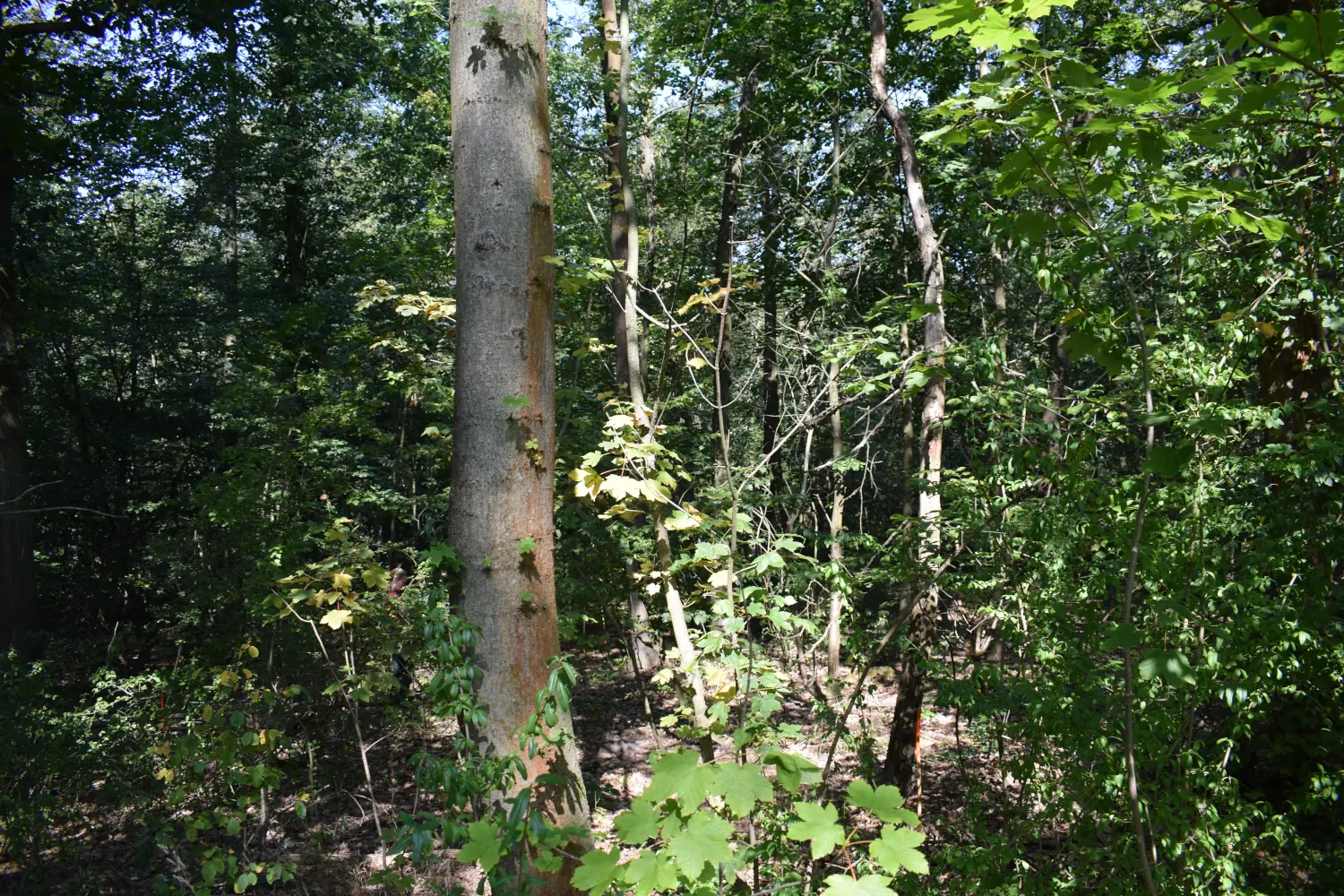 
### Key feature: Habitat trees
In this forest section, we found two habitat trees. Habitat trees are trees that provide at least one microhabitat – i.e., a small-scale or clearly delimited living space for other organisms. These include, for example, cavities, raptor nests, decay pockets, peeling bark, fungal brackets, or broken crowns. Habitat trees are of enormous ecological importance. They provide habitat for animals, plants, and fungi, serve as a food source for, for example, larvae, and thus have a major impact on forest biodiversity.
More interesting information provided by [Bundeswaldinventur](https://www.bundeswaldinventur.de/vierte-bundeswaldinventur-2022/lebensraum-wald#c56999) and in the [Merkblatt des LWF](https://www.lwf.bayern.de/mam/cms04/service/dateien/mb17-biotopbaeume-2019_bf.pdf).
### Forest profile

#### Coverage of deadwood
**Large deadwood:** standing 0 %, lying down 0 %
**Medium deadwood:** standing 1 %, lying down 5 %
**Fine deadwood:** 10 %
**Rootstocks:** 9 pcs
*Number of old trees (BHD > 80cm):* 0
*Number of habitat trees:* *2*

#### Cover tree layers
**Tree layer 1:** 50 % (Fraxinus excelsior, Quercus rubra, Acer platanoides, Quercus robur, Quercus petraea)
**Tree layer 2:** 10 % (Prunus serotina, Acer platanoides)
**Tree layer 3:** 40 % (Carpinus betulus, Ligustrum vulgare, Cornus sanguinea, Symphoricarpos albus, Prunus serotina, Acer platanoides)
**Herb layer:** 10 % (Rubus, Dactylis polygama)
**Growth classes:** 6

#### Other Information
**Disturbance indicator species:** low (Rubus)
**Neophytes:** low (Symphoricarpos albus, Prunus serotina)
**Relative crown distance:** closed
**Mean crown defoliation:** 45 %
## Dölauer Heide - Area 21a
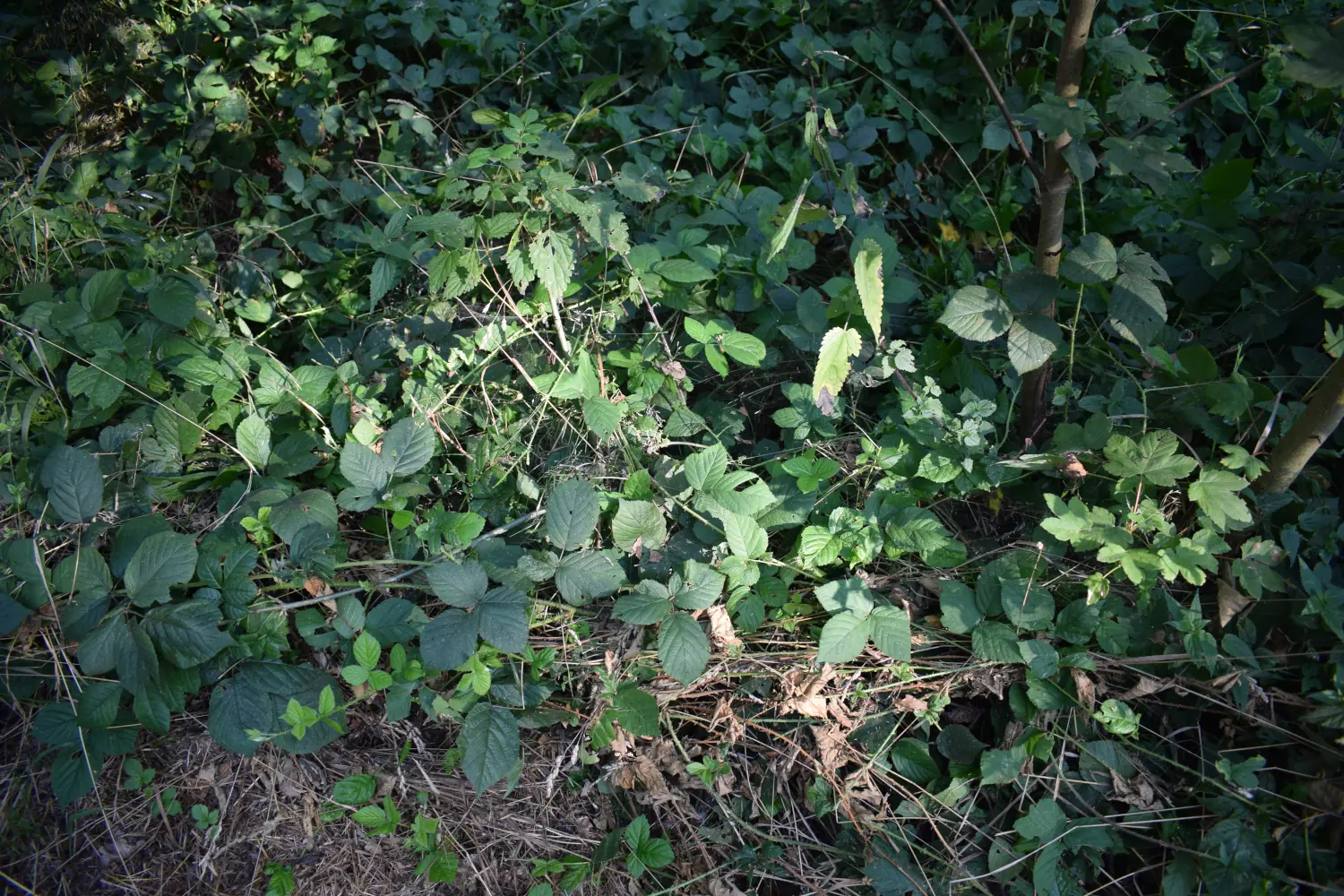 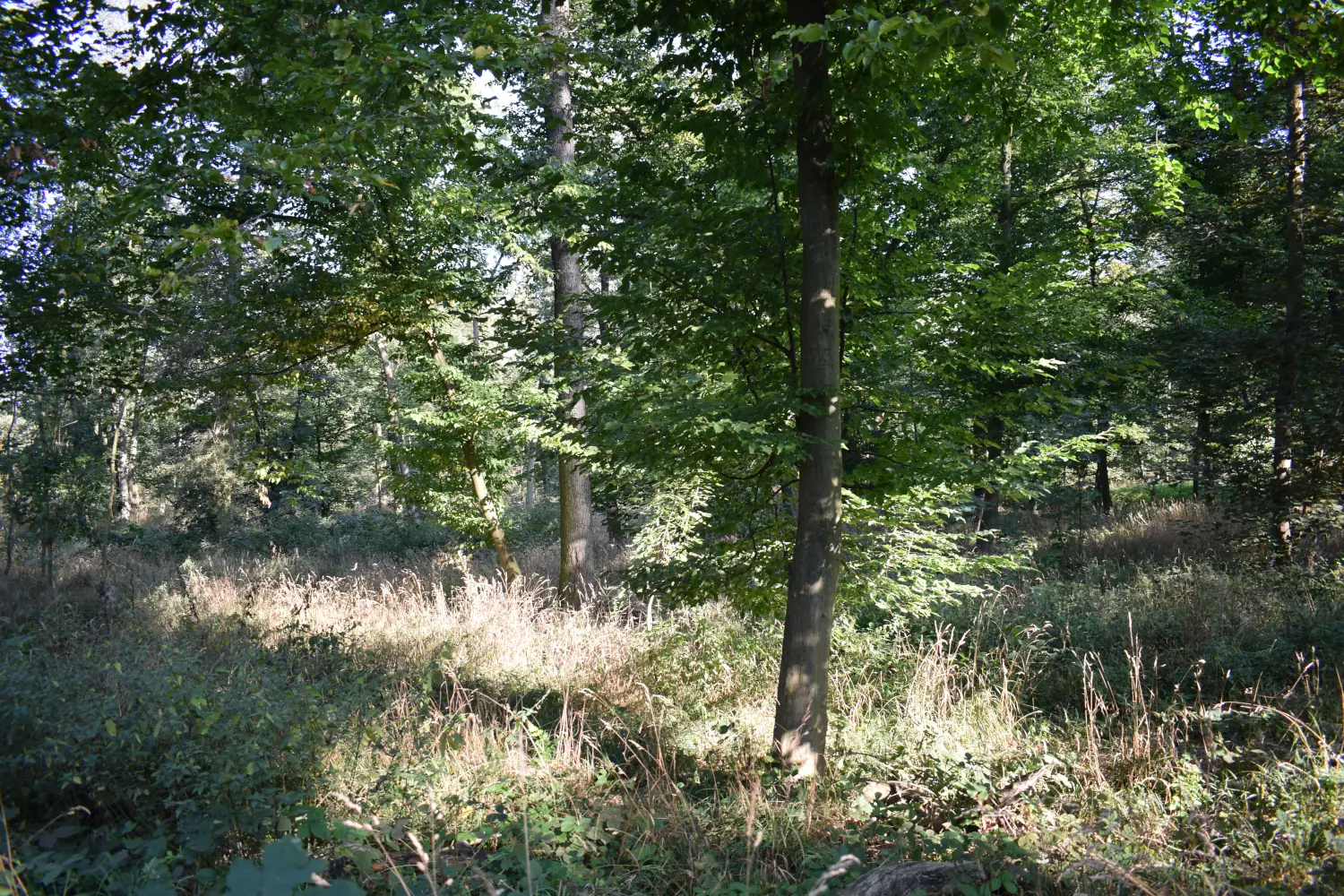 
### Key feature: Disturbance indicator species
In this forest section, we found many species that can indicate disturbance. Indicator species of disturbance are plant species that can be sign for, e.g., nutrient enrichment or degradation of a habitat. Examples include Urtica dioica and Rubus fruticosus. They indicate a deviation from the species-rich condition typical for the habitat. A high proportion of disturbance indicator species results in the conservation status of Natura 2000 habitat types being downgraded. An increased occurrence of disturbance indicator species is often caused by nutrient enrichment—particularly excess nitrogen—or by soil compaction.
Further information can be found on the [Website of the State Office for Nature Conservation Saxony-Anhalt](https://lau.sachsen-anhalt.de/fachthemen/naturschutz/naturschutzinformationen/kartieranleitungen)
### Forest profile

#### Coverage of deadwood
**Large deadwood:** standing 0 %, lying down 0 %
**Medium deadwood:** standing 0 %, lying down 5 %
**Fine deadwood:** 5 %
**Rootstocks:** 5 pcs
*Number of old trees (BHD > 80cm):* 0
*Number of habitat trees:* 0

#### Cover tree layers
**Tree layer 1:** 40 % (Carpinus betulus, Quercus robur, Quercus petraea)
**Tree layer 2:** 10 % (Acer pseudoplatanus, Carpinus betulus, Acer platanoides)
**Tree layer 3:** 20 % (Acer pseudoplatanus, Corylus avellana, Prunus serotina, Acer platanoides)
**Herb layer:** 90 % (Urtica dioica, Rubus, Impatiens parviflora, Galium odoratum, Dactylis polygama)
**Growth classes:** 5

#### Other Information
**Disturbance indicator species:** high (Urtica dioica, Rubus, Mahonia aquifolium)
**Neophytes:** low (Impatiens parviflora, Mahonia aquifolium, Prunus serotina)
**Relative crown distance:** loose
**Mean crown defoliation:** 41 %
## Dölauer Heide - Area 23a
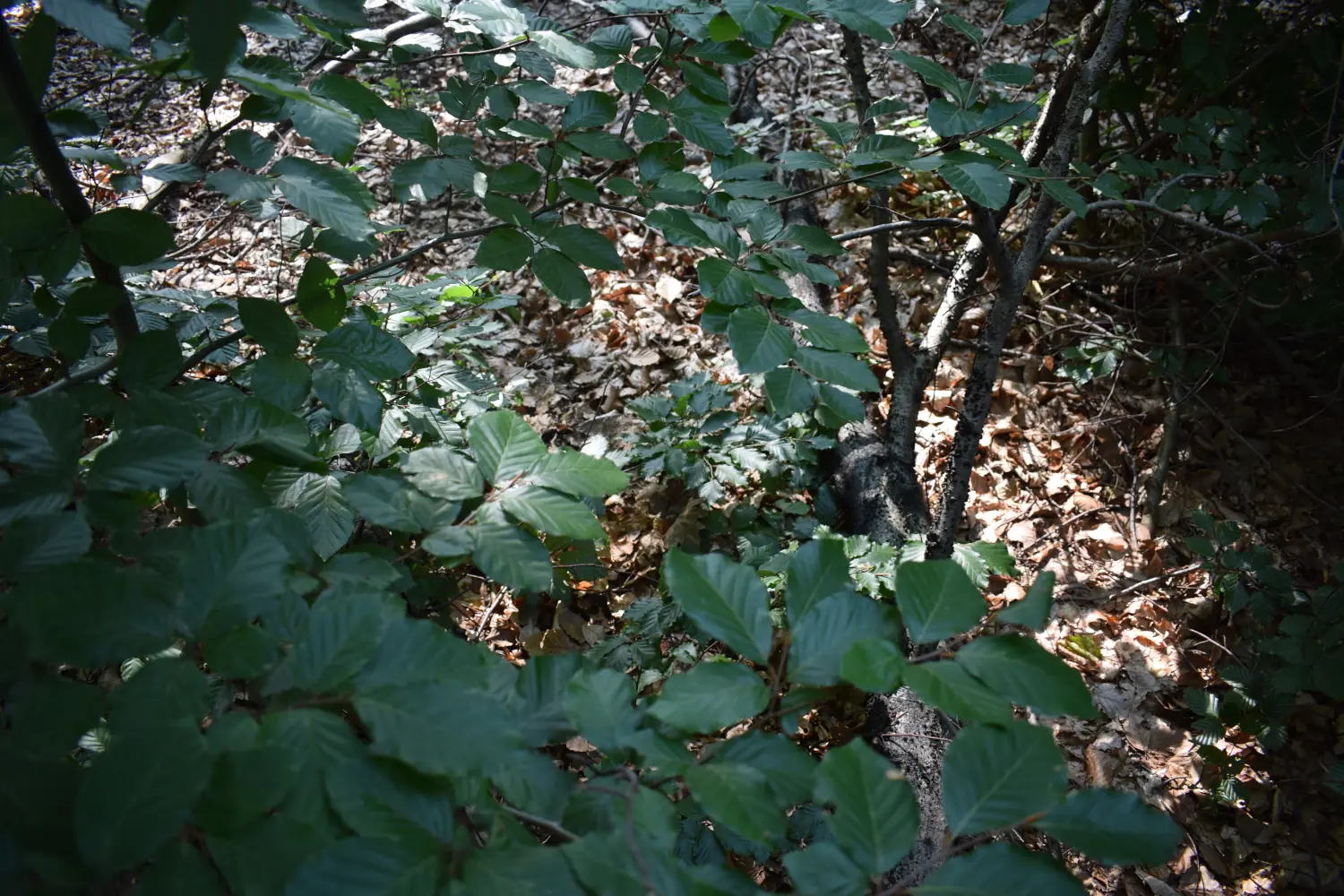  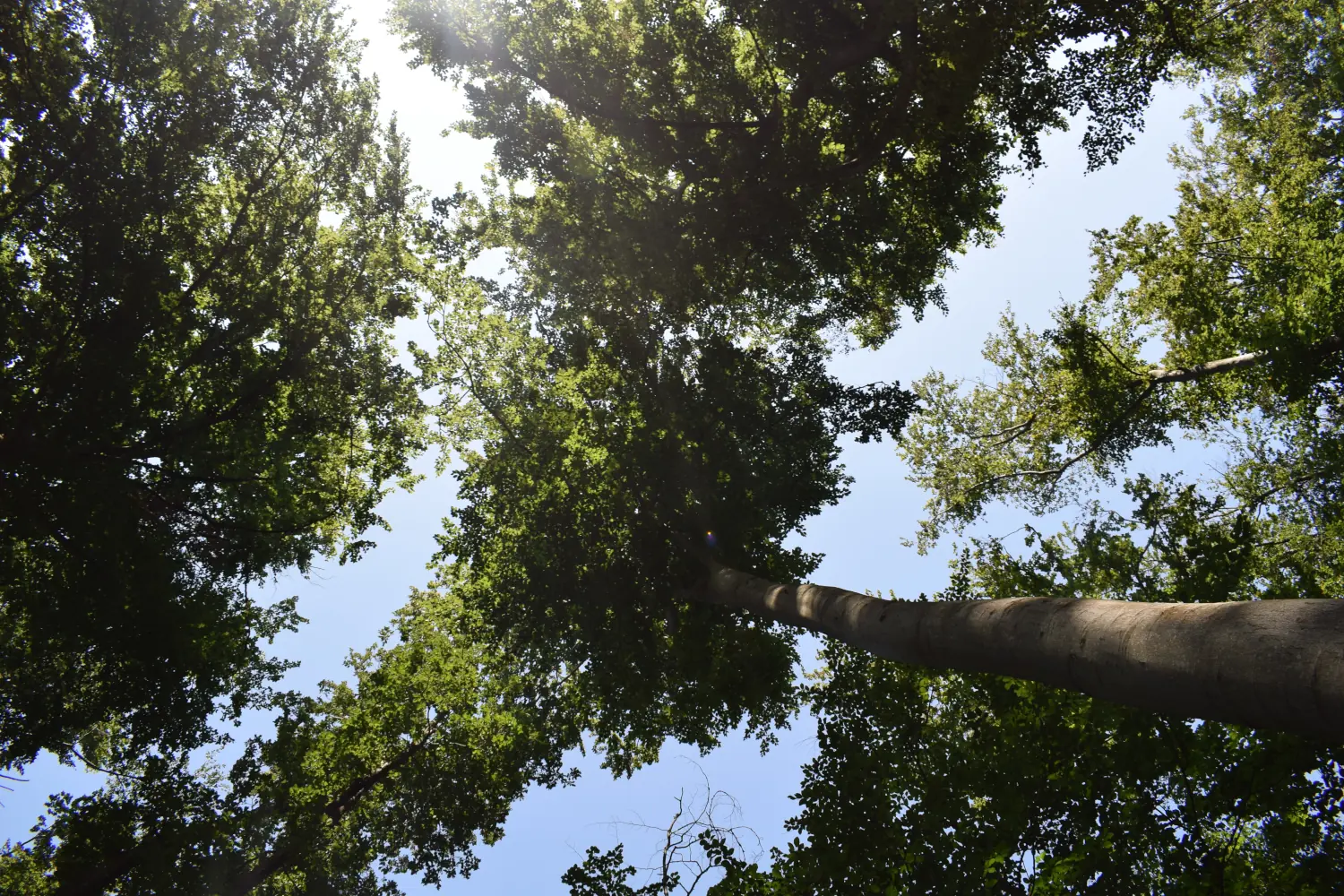
### Key feature: Fagus sylvatica → Tree of the Year
The dominant tree species in this forest section is Fagus sylvatica. Fagus sylvatica is one of the most common tree species in Germany and was named Tree of the Year in 2022. Each year, the "Tree of the Year – Dr. Silvius Wodarz Foundation" selects a tree species that is considers particularly valuable or interesting. In addition to the Tree of the Year, there are, for example, also Bird of the Year, Soil of the Year, or even Amphibian of the Year. These designations aim to bring certain species and habitats into focus, emphasise their importance, raise interest in nature conservation, and spread knowledge about the species.
More informationen is available on the [website Tree of the Year](https://baum-des-jahres.de/baeume-seit-1989/).
### Forest profile

#### Coverage of deadwood
**Large deadwood:** standing 0 %, lying down 0 %
**Medium deadwood:** standing 0 %, lying down 5 %
**Fine deadwood:** 20 %
**Rootstocks:** 9 pcs
*Number of old trees (BHD > 80cm):* 0
*Number of habitat trees:* *2*

#### Cover tree layers
**Tree layer 1:** 60 % (Fagus sylvatica)
**Tree layer 2:** 10 % (Carpinus betulus, Fagus sylvatica)
**Tree layer 3:** 20 % (Fagus sylvatica)
**Herb layer:** 40 % (Rubus, Circaea lutetiana, Impatiens parviflora, Melica nutans, Dactylis polygama)
**Growth classes:** 5

#### Other Information
**Biotic impacts:** low (Wildlife browsing)
**Disturbance indicator species:** low (Rubus)
**Neophytes:** low (Impatiens parviflora)
**Relative crown distance:** loose
**Mean crown defoliation:** 28 %
## Dölauer Heide - Area 26a
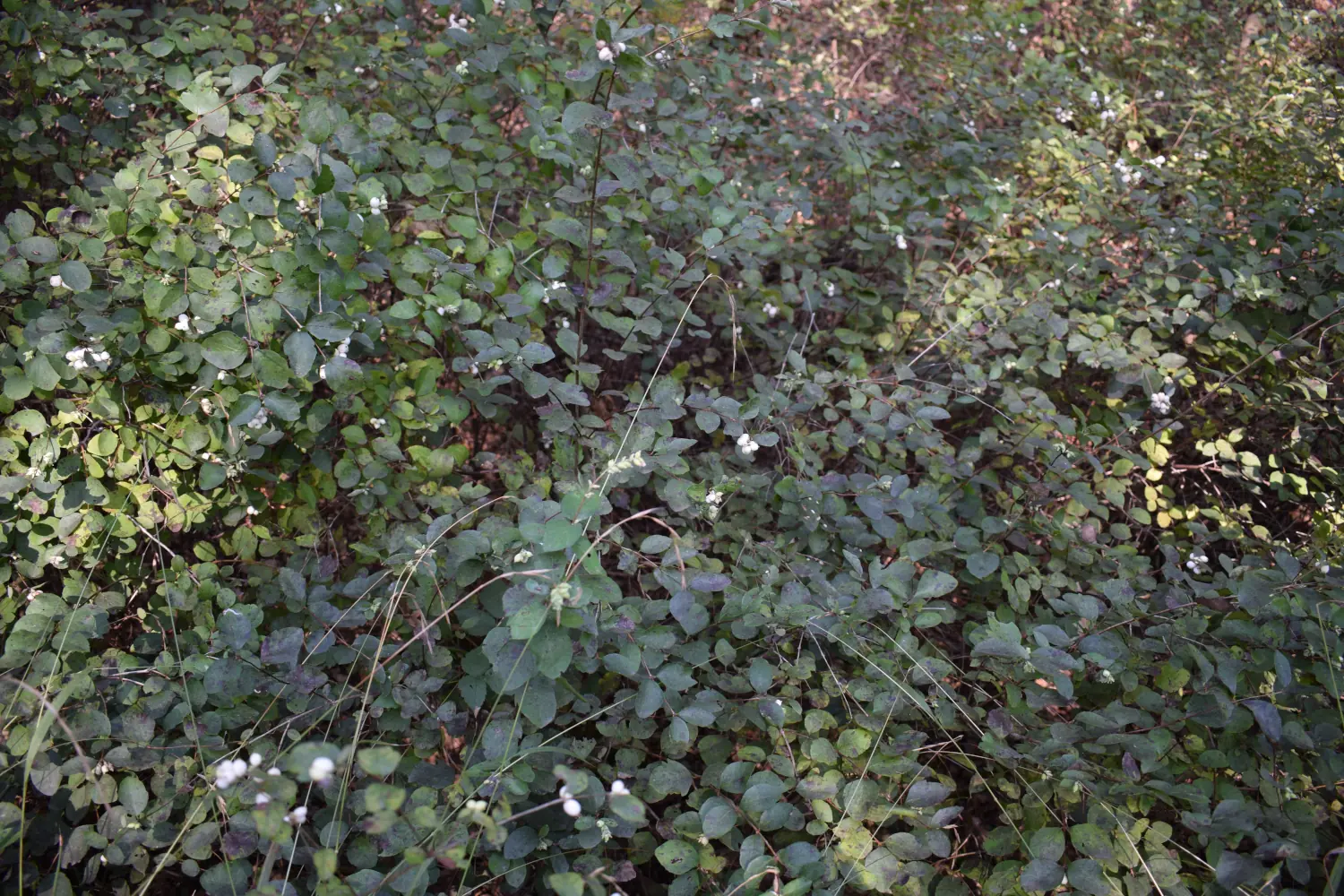 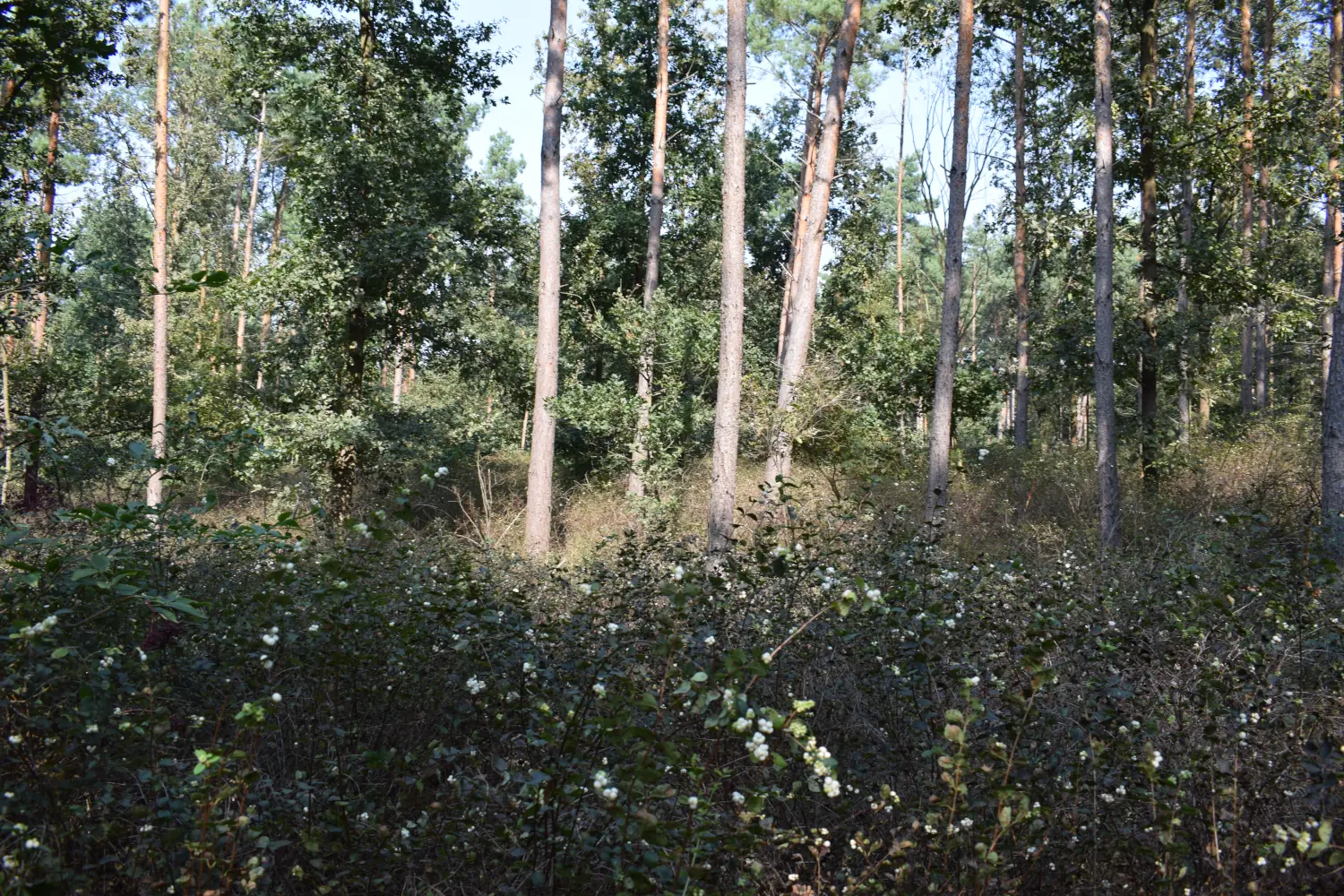 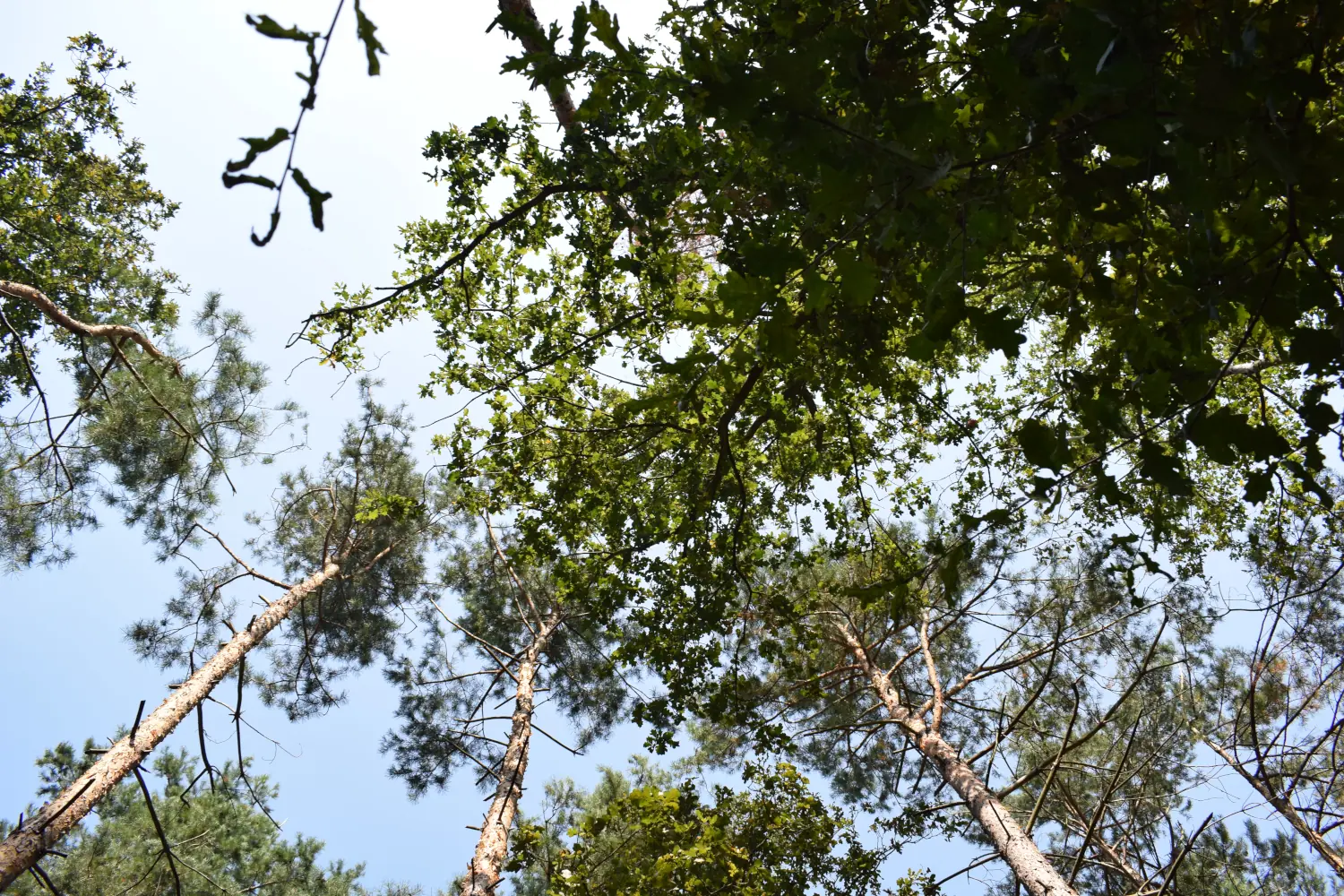
### Key feature: Neophytes (invasive species)
In this forest section, the shrub layer is strongly dominated by Symphoricarpos albus. This species is considered an invasive neophyte in Germany. Neophytes are species that were introduced by humans after 1492 into areas where they did not naturally occur. Species are considered invasive when they have undesirable impacts on other species, biological communities, or biotopes.
This is the case, for example, when they spread strongly and thereby compete with native species. Often, native species are displaced as a result, and biodiversity is reduced. Some invasive species can also cause health problems in humans (e.g., Heracleum mantegazzianum, Ambrosia artemisiifolia) or damage infrastructure (e.g., Reynoutria japonica).
The [Bundesamt für Naturschutz](https://www.bfn.de/grundwissen-ueber-neobiota) and the [BUND](https://www.bund.net/themen/tiere-pflanzen/invasive-arten/) provide more interesting information for you.
### Forest profile

#### Coverage of deadwood
**Large deadwood:** standing 0 %, lying down 0 %
**Medium deadwood:** standing 1 %, lying down 7 %
**Fine deadwood:** 21 %
**Rootstocks:** 18 pcs
*Number of old trees (BHD > 80cm):* 0
*Number of habitat trees:* 0

#### Cover tree layers
**Tree layer 1:** 30 % (Quercus petraea, Prunus avium, Pinus sylvestris)
**Tree layer 2:** 2 % (Acer pseudoplatanus, Quercus petraea)
**Tree layer 3:** 90 % (Acer pseudoplatanus, Symphoricarpos albus)
**Herb layer:** 10 % (Rubus, Dactylis polygama, Brachypodium sylvaticum)
**Growth classes:** 4

#### Other Information
**Neophytes:** high (Symphoricarpos albus)
**Relative crown distance:** closed
**Mean crown defoliation:** 28 %
## Dölauer Heide - Area 30a
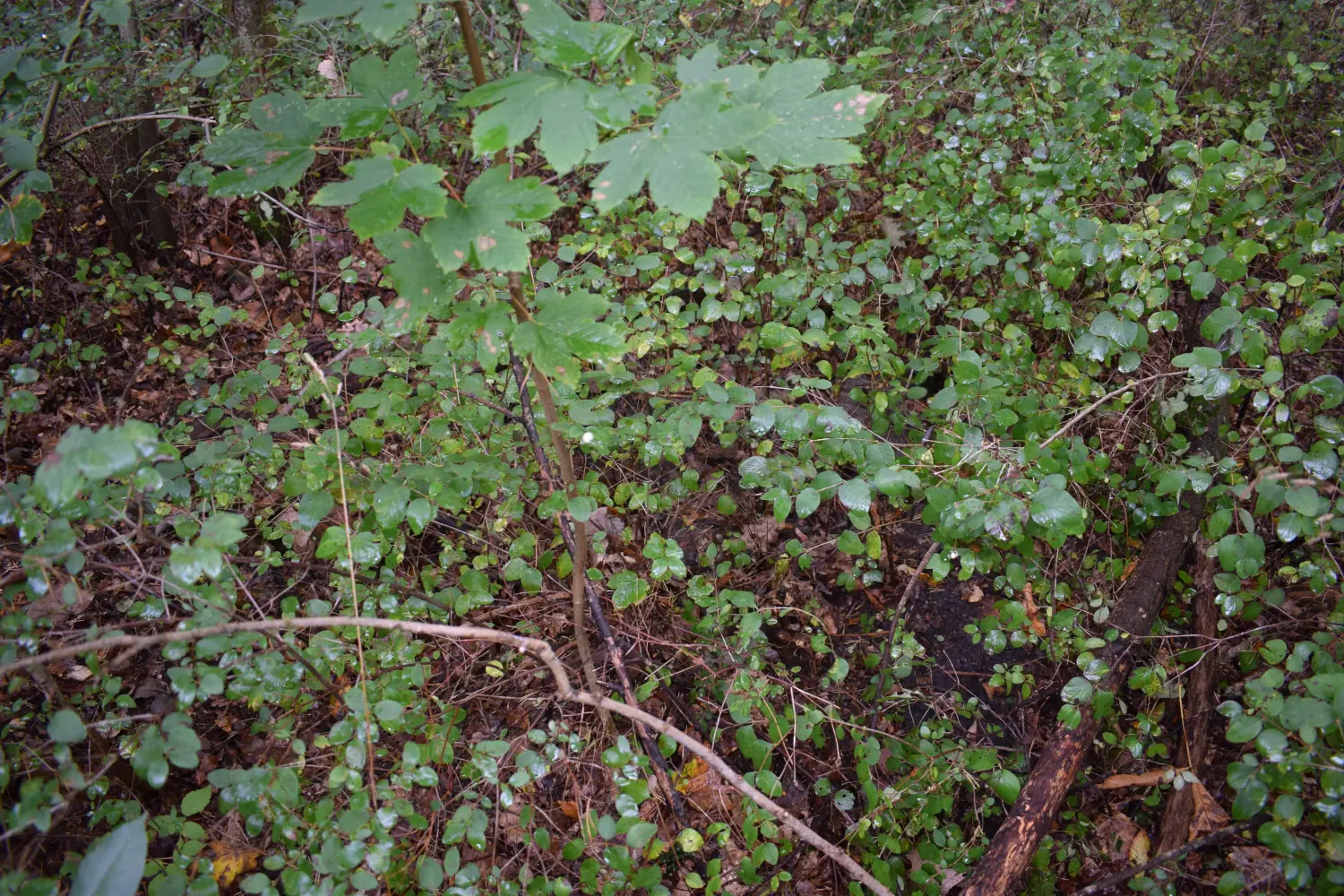 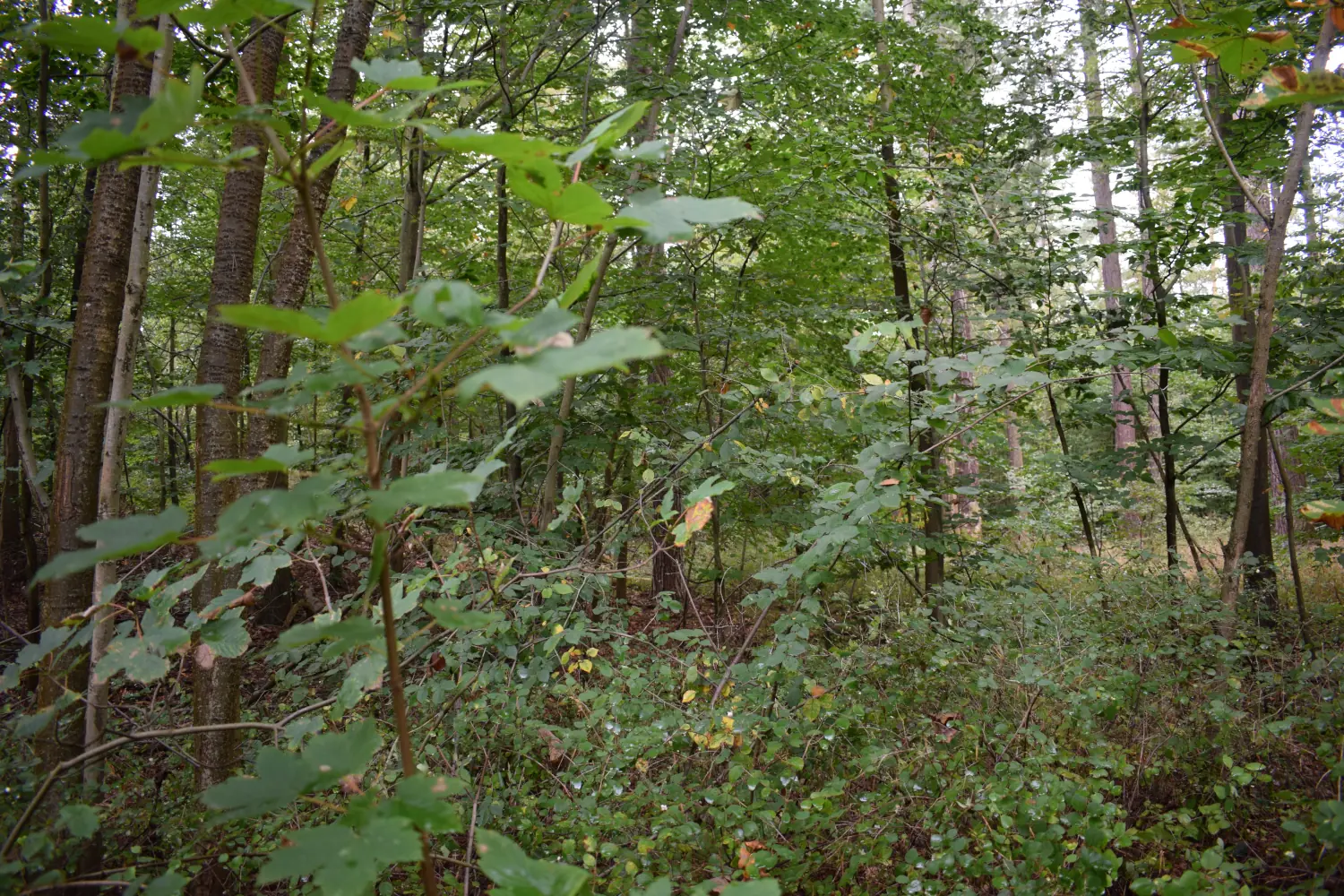 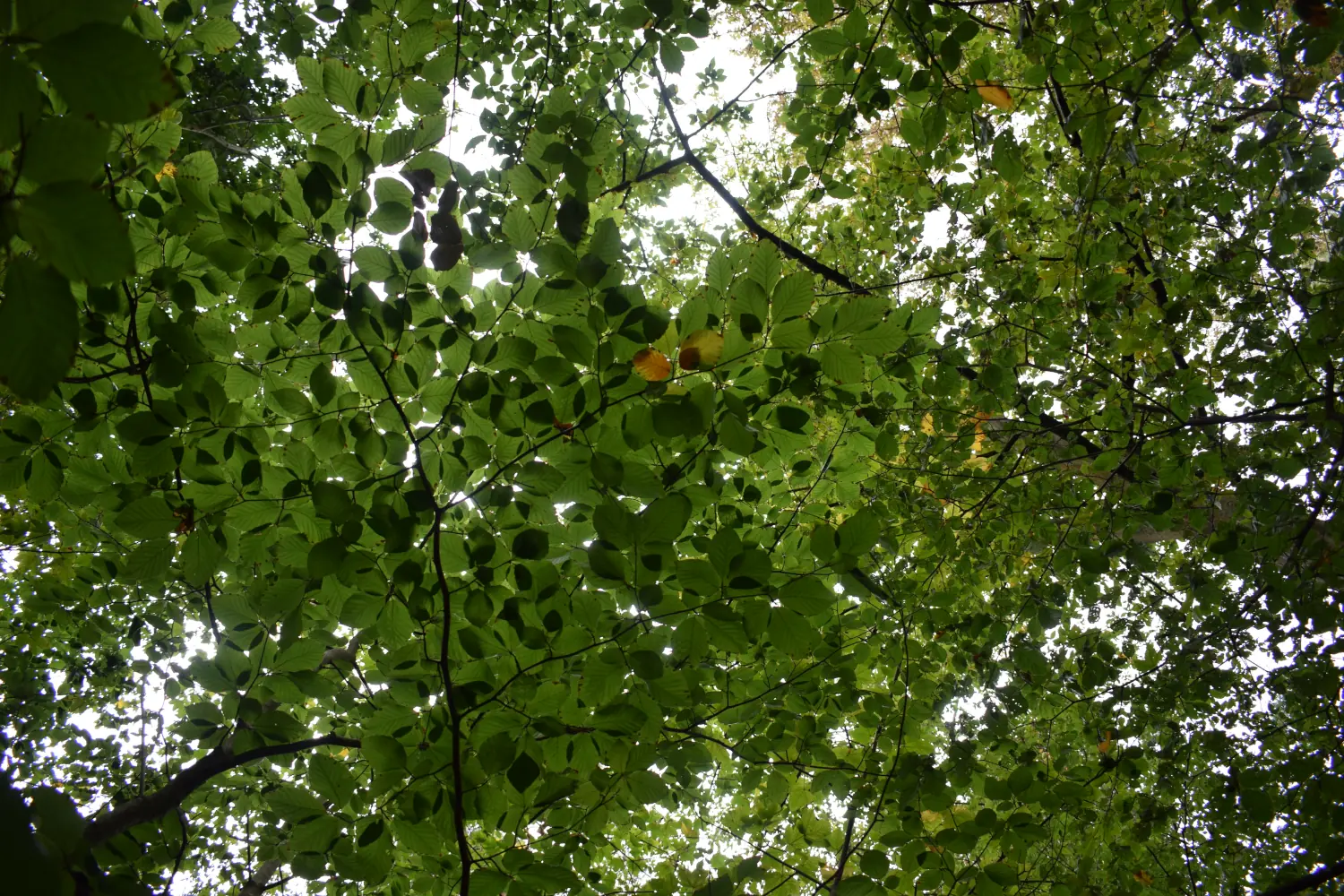
### Key feature: Multi-layered structure
In this forest section, we find all three tree layers. This means that old, very old, and young trees are present. Younger generations are already growing up beneath older trees. This is more natural than, for example, even-aged stands, which consist of only a single tree storey. Multi-layered stands can, for instance, withstand storms better than single-layered stands.
More information is available in the [Fourth National Forest Inventory](https://www.bundeswaldinventur.de/vierte-bundeswaldinventur-2022/lebensraum-wald#c56994).
### Forest profile

#### Coverage of deadwood
**Large deadwood:** standing 0 %, lying down 0 %
**Medium deadwood:** standing 0 %, lying down 0 %
**Fine deadwood:** 6 %
**Rootstocks:** 16 pcs
*Number of old trees (BHD > 80cm):* 0
*Number of habitat trees:* 0

#### Cover tree layers
**Tree layer 1:** 30 % (Carpinus betulus, Quercus petraea)
**Tree layer 2:** 10 % (Fagus sylvatica, Quercus rubra)
**Tree layer 3:** 80 % (Ulmus minor, Fagus sylvatica, Quercus rubra, Symphoricarpos albus)
**Herb layer:** 30 % (Rubus, Glechoma hederacea, Dactylis polygama, Brachypodium sylvaticum)
**Growth classes:** 5

#### Other Information
**Neophytes:** moderate (Mahonia aquifolium, Quercus rubra, Symphoricarpos albus, Prunus serotina)
**Relative crown distance:** closed
**Mean crown defoliation:** 40 %
## Dölauer Heide - Area 32a
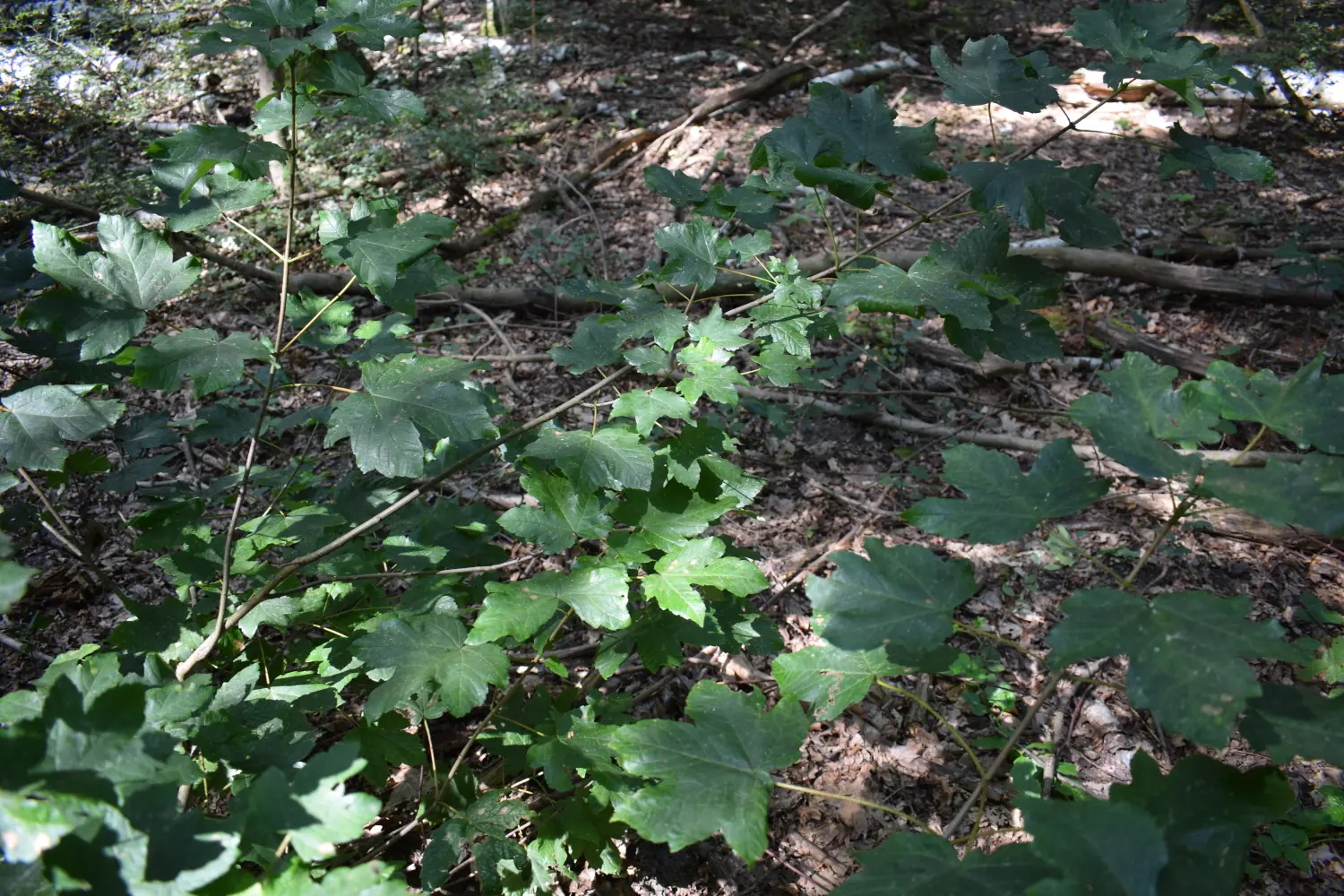  
### Key feature: Growth classes
In this section of the forest, we recorded six different growth classes or age stages of trees. Meaning that trees of different age groups were present. The presence of multiple growth classes indicates a rather natural situation of growth classes. This can enhance forest stability, as structural diversity can, for example, increase the forest’s resistance to storm damage. While large and very large timber is ecologically particularly valuable and can provide microhabitats for other species, regeneration, thicket stage trees, pole stage trees, as well as small and medium-sized timber ensure the continuity of the forest. Through the interaction of different age stages, a diverse habitat is created for a wide variety of animal, plant, and fungal species.
The [Bundeswaldinventur](https://www.bundeswaldinventur.de/vierte-bundeswaldinventur-2022/hintergrundinformationen#c57032?target=_blank) provides more information.
### Forest profile

#### Coverage of deadwood
**Large deadwood:** standing 0 %, lying down 0 %
**Medium deadwood:** standing 6 %, lying down 11 %
**Fine deadwood:** 20 %
**Rootstocks:** 10 pcs
*Number of old trees (BHD > 80cm):* 0
*Number of habitat trees:* 0

#### Cover tree layers
**Tree layer 1:** 40 % (Quercus rubra, Quercus petraea)
**Tree layer 2:** 30 % (Acer platanoides)
**Tree layer 3:** 40 % (Acer pseudoplatanus, Symphoricarpos albus)
**Herb layer:** 0 %
**Growth classes:** 4

#### Other Information
**Neophytes:** moderate (Mahonia aquifolium, Quercus rubra, Symphoricarpos albus)
**Relative crown distance:** closed
**Mean crown defoliation:** 45 %
## Dölauer Heide - Area 33a
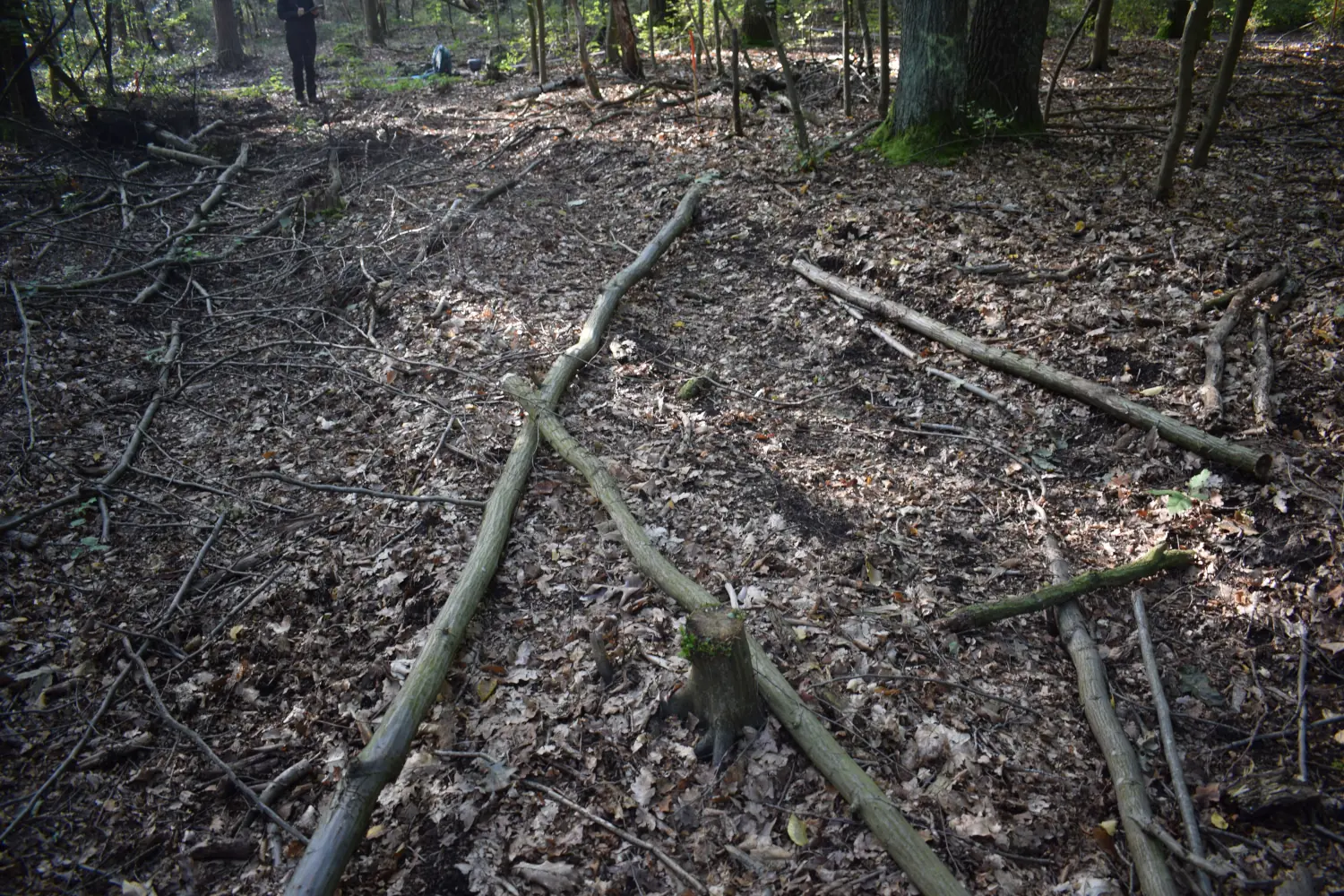 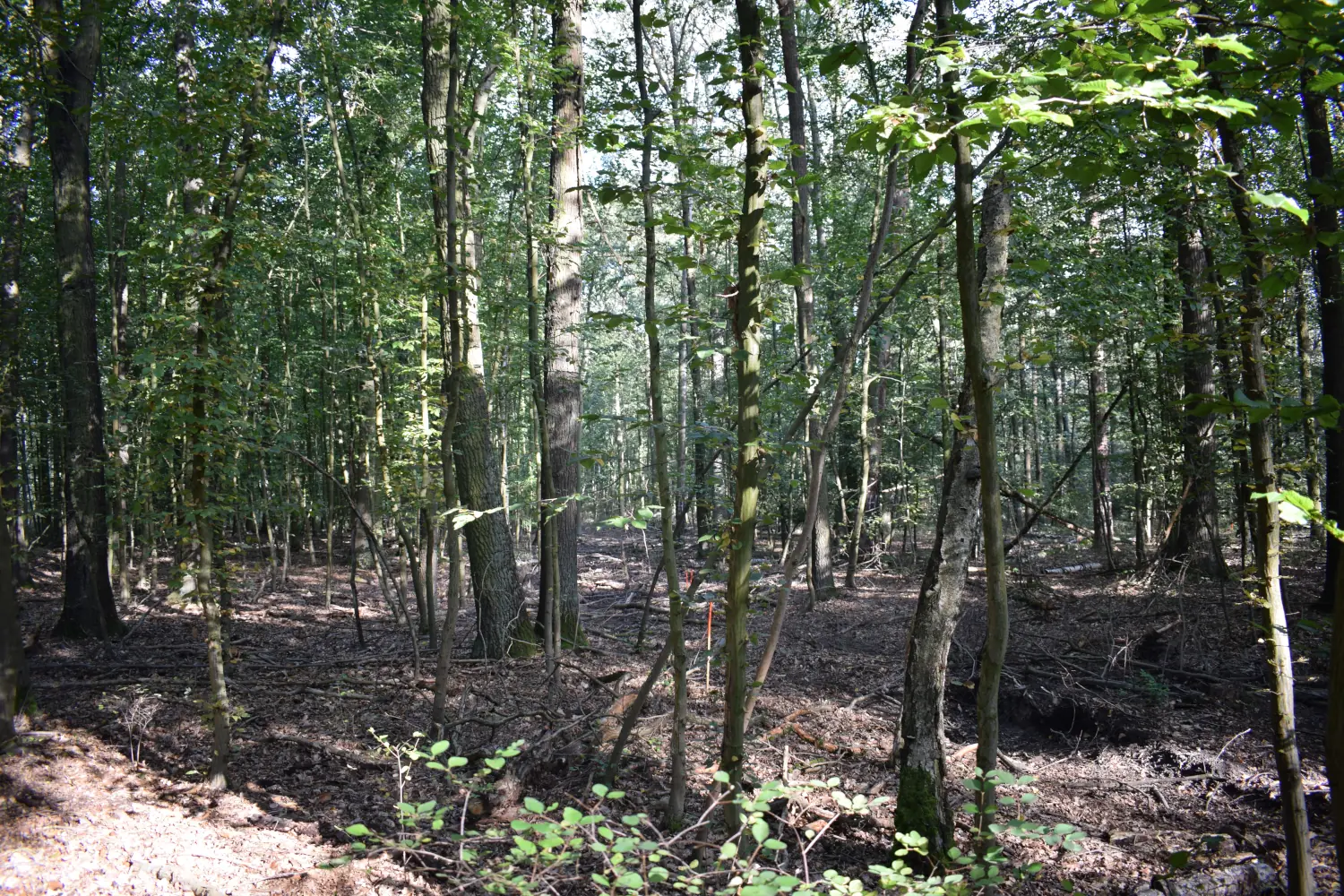 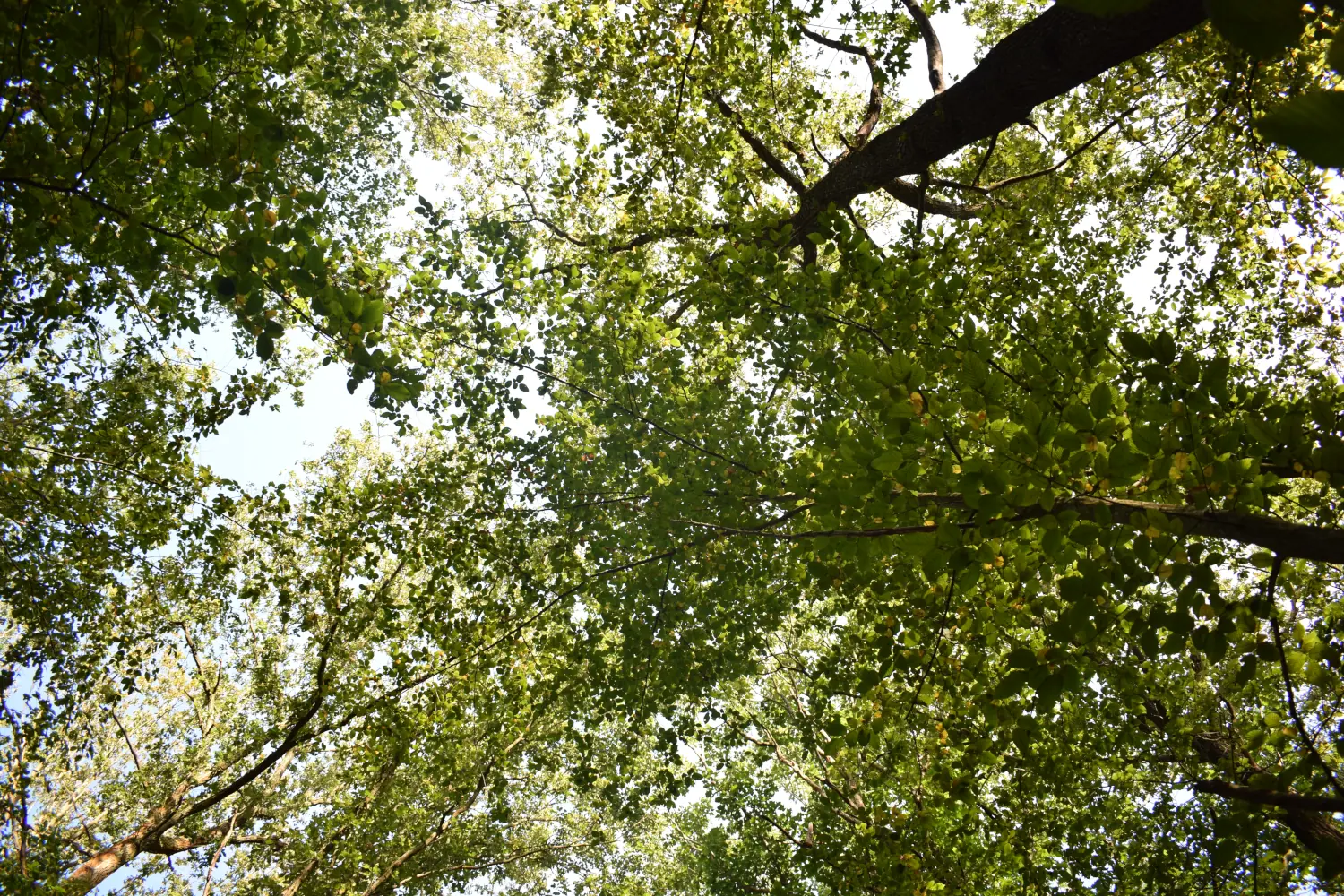
### Key feature: Crown defoliation
In this forest section, we recorded a relatively high mean crown thinning. Crown defoliation describes the visible and measurable needle or leaf loss of the tree crown compared to a fully needled or fully leaved healthy tree of the respective species. It is considered an important indicator of the vitality of forest trees and has been recorded annually since 1984 as part of the German Forest Condition Survey. Crown thinning can indicate tree damage or health. However, a thinned crown can have many causes. Some of the main influences include soil changes such as acidification and eutrophication, prolonged dry periods, insects and tree diseases, above-average fruit production, and advanced tree age.
More information can be found on the [website of the Federal Environment Agency](https://www.umweltbundesamt.de/daten/flaeche-boden-land-oekosysteme/land-oekosysteme/waldzustand-kronenverlichtung#ergebnisse-der-waldzustandserhebung) and the [BMLEH](https://www.bmleh.de/DE/themen/wald/wald-in-deutschland/waldzustandserhebung.html).
### Forest profile

#### Coverage of deadwood
**Large deadwood:** standing 0 %, lying down 0 %
**Medium deadwood:** standing 0 %, lying down 10 %
**Fine deadwood:** 20 %
**Rootstocks:** 15 pcs
*Number of old trees (BHD > 80cm):* 0
*Number of habitat trees:* 0

#### Cover tree layers
**Tree layer 1:** 70 % (Quercus rubra, Quercus petraea)
**Tree layer 2:** 10 % (Carpinus betulus, Acer platanoides)
**Tree layer 3:** 10 % (Prunus padus, Carpinus betulus, Mahonia aquifolium, Symphoricarpos albus)
**Herb layer:** 1 %
**Growth classes:** 4

#### Other Information
**Unintended effects of forest operations:** moderate (Logging trail, Path)
**Neophytes:** low (Mahonia aquifolium, Quercus rubra, Symphoricarpos albus)
**Relative crown distance:** closed
**Mean crown defoliation:** 53 %
## Dölauer Heide - Area 37a
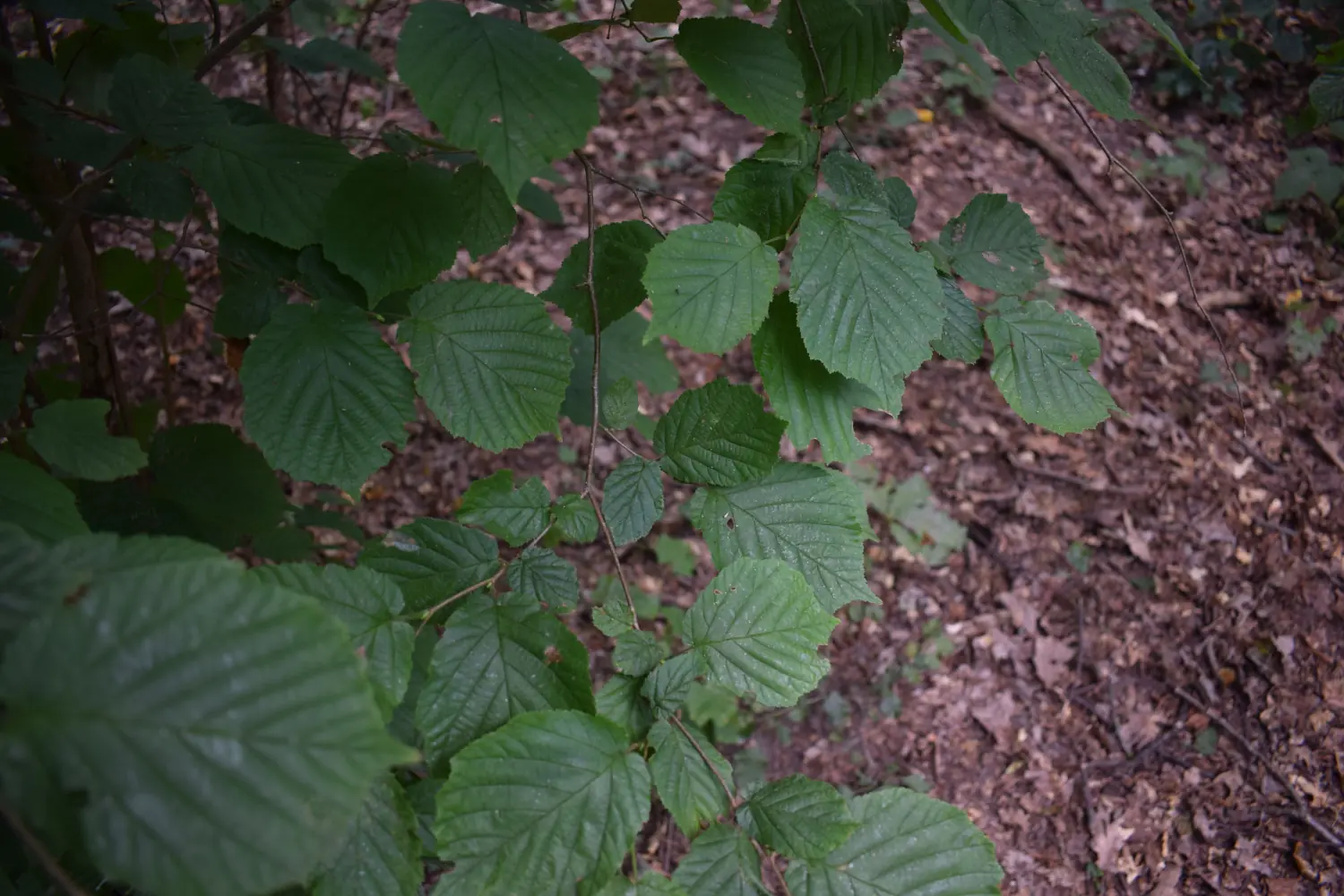  
### Key feature: Natural regeneration
In this forest section, we recorded pronounced tree regeneration. Meaning that many young trees are establishing. Where foresters rely on so-called natural regeneration, they count on the establishment of a new forest generation from the seed of surrounding trees. Artificial regeneration refers to forest regeneration in which trees are deliberately introduced, for example through the planting of young trees from nurseries, by direct seeding, or by planting cuttings (willow or poplar branches form roots and sprout when inserted into the soil).
Read more on the topic at the website [„forst erklärt“](https://forsterklaert.de/naturverjuengung) and an [article of the LWF](https://www.lwf.bayern.de/mam/cms04/waldbau-bergwald/dateien/a99_naturverjuengung_aus_sicht_des_waldnaturschutzes_bf_geschuetzt.pdf).
### Forest profile

#### Coverage of deadwood
**Large deadwood:** standing 5 %, lying down 0 %
**Medium deadwood:** standing 1 %, lying down 30 %
**Fine deadwood:** 30 %
**Rootstocks:** 2 pcs
*Number of old trees (BHD > 80cm):* 0
*Number of habitat trees:* 0

#### Cover tree layers
**Tree layer 1:** 10 % (Quercus petraea)
**Tree layer 2:** 10 % (Acer platanoides, Tilia cordata)
**Tree layer 3:** 85 % (Acer pseudoplatanus, Corylus avellana, Symphoricarpos albus, Acer platanoides, Tilia cordata)
**Herb layer:** 10 % (Geum urbanum, Impatiens parviflora, Galium odoratum)
**Growth classes:** 4

#### Other Information
**Disturbance indicator species:** low (Rubus)
**Neophytes:** low (Impatiens parviflora, Symphoricarpos albus)
**Relative crown distance:** closed to loose
**Mean crown defoliation:** 83 %
## Dölauer Heide - Area 40a
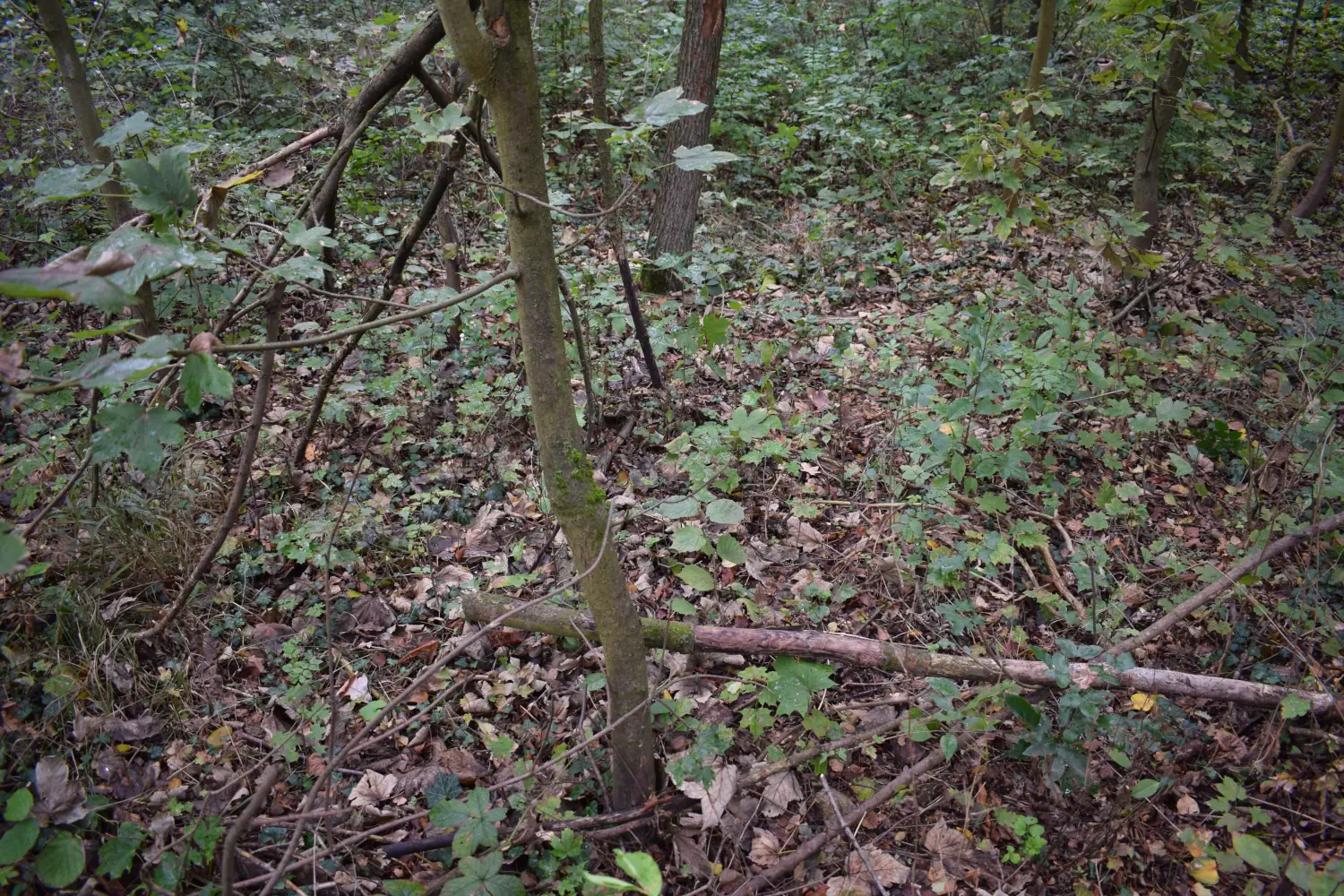 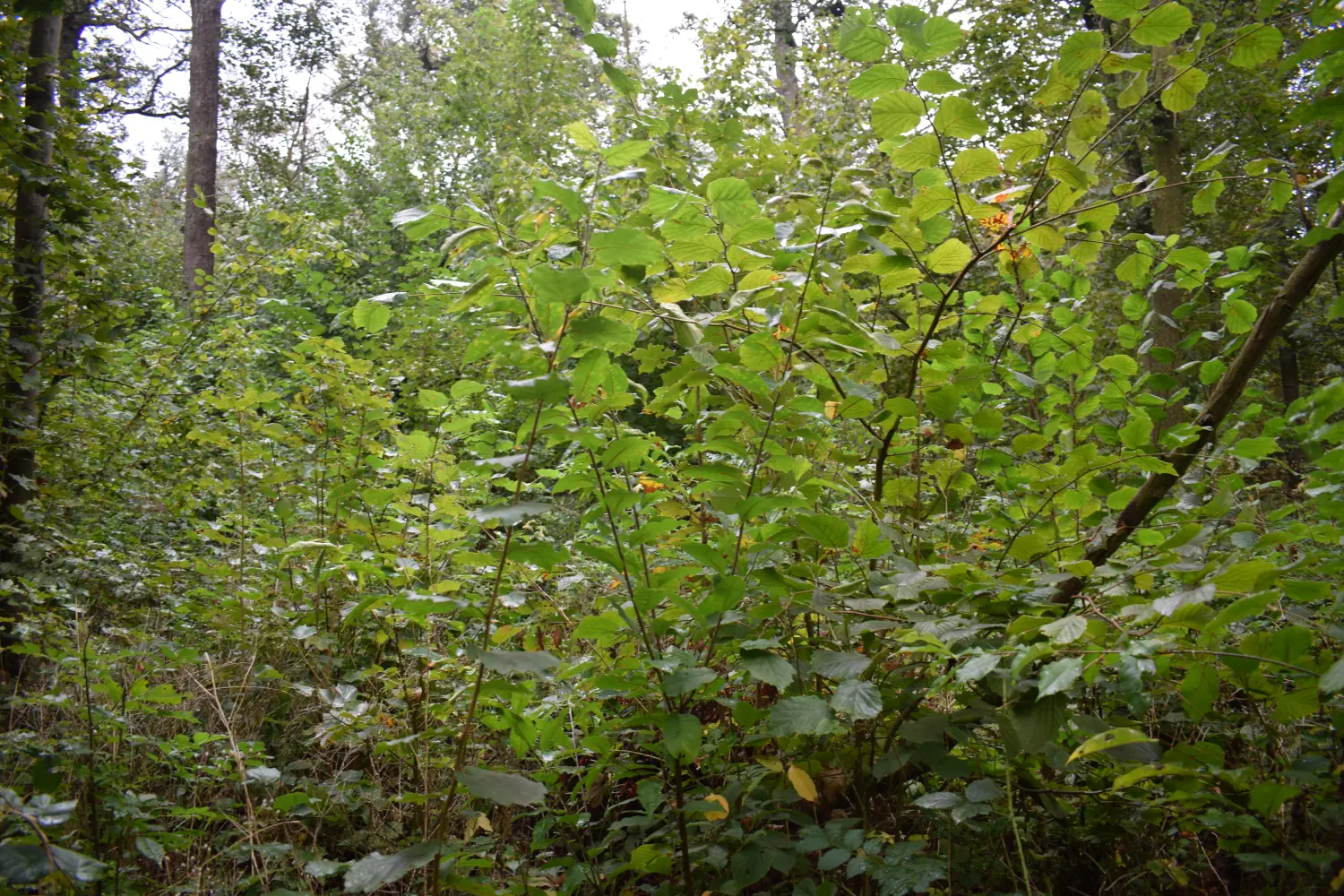 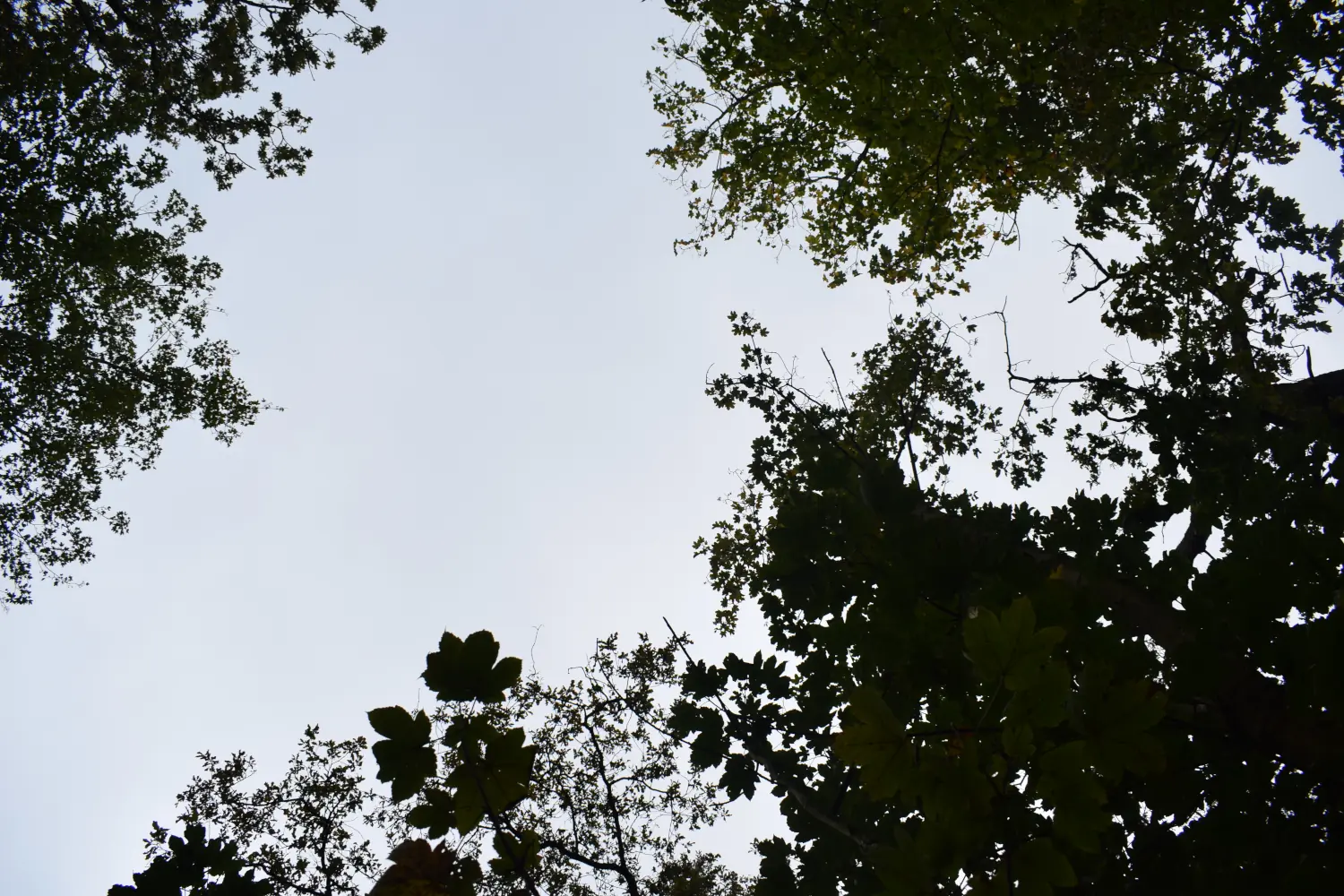
### Key feature: At what point is a forest considered a forest?
This forest section is rather open with gaps, as several trees have died. This may prompt the question: Is this still a forest? Or, more fundamentally: when does an area of trees qualify as a forest? A forest is defined as a tree-dominated area of sufficient extent to allow the development of a characteristic forest interior climate (i.e., reduced radiation, higher humidity, moderated temperatures, and reduced wind exposure). This is not the case, for example, with tree-lined avenues, parklands, or tree nurseries. § 2 of the German Federal Forest Act (Bundeswaldgesetz) defines forest as any area of land stocked with forest plants (including forest areas temporarily without trees), forest roads, timber storage sites, and other areas associated with forests (BWI 4).
Read more background information on [Bundeswaldinventur](https://www.bundeswaldinventur.de/vierte-bundeswaldinventur-2022/hintergrundinformationen#c57030)
### Forest profile

#### Coverage of deadwood
**Large deadwood:** standing 1 %, lying down 0 %
**Medium deadwood:** standing 1 %, lying down 6 %
**Fine deadwood:** 10 %
**Rootstocks:** 6 pcs
*Number of old trees (BHD > 80cm):* 0
*Number of habitat trees:* 0

#### Cover tree layers
**Tree layer 1:** 30 % (Acer pseudoplatanus, Quercus petraea)
**Tree layer 2:** 20 % (Acer pseudoplatanus)
**Tree layer 3:** 70 % (Acer pseudoplatanus, Fraxinus excelsior, Corylus avellana, Prunus serotina, Acer platanoides)
**Herb layer:** 30 % (Rubus, Geum urbanum)
**Growth classes:** 5

#### Other Information
**Disturbance indicator species:** moderate (Rubus)
**Neophytes:** low (Prunus serotina)
**Relative crown distance:** sparse
**Mean crown defoliation:** 80 %
[Back](https://www.waldki.metronom-leipzig.com/en/waldwissen)
- [Privacy policy](https://www.waldki.metronom-leipzig.com/en/datenschutz)
- [Accessibility](https://www.waldki.metronom-leipzig.com/en/barrierefreiheit)
- [Imprint](https://www.waldki.metronom-leipzig.com/en/impressum)
Contact
Hochschule Anhalt
Lohmannstraße 23
06366 Köthen
Hochschule Anhalt
Strenzfelder Allee 28
06406 Bernburg (Saale)
Press
Verena Arndt
[{{ '](mailto:%7B%7B%20'meinewaldki@hs-anhalt.de'%7Csafe_email%20%7D%7D)'|safe\_email }}
[03471 355 1280](tel:+4934713551280)
Copyright © Hochschule Anhalt
 

Follow us on:
[  ](https://www.instagram.com/meinewaldki/)
---
## Navigation
- Parent: [Forest Knowledge](https://www.waldki.metronom-leipzig.com/en/waldwissen.md)
- Previous: [Biosphere Reserve "Karstlandschaft Südharz"](https://www.waldki.metronom-leipzig.com/en/waldwissen/bks.md)